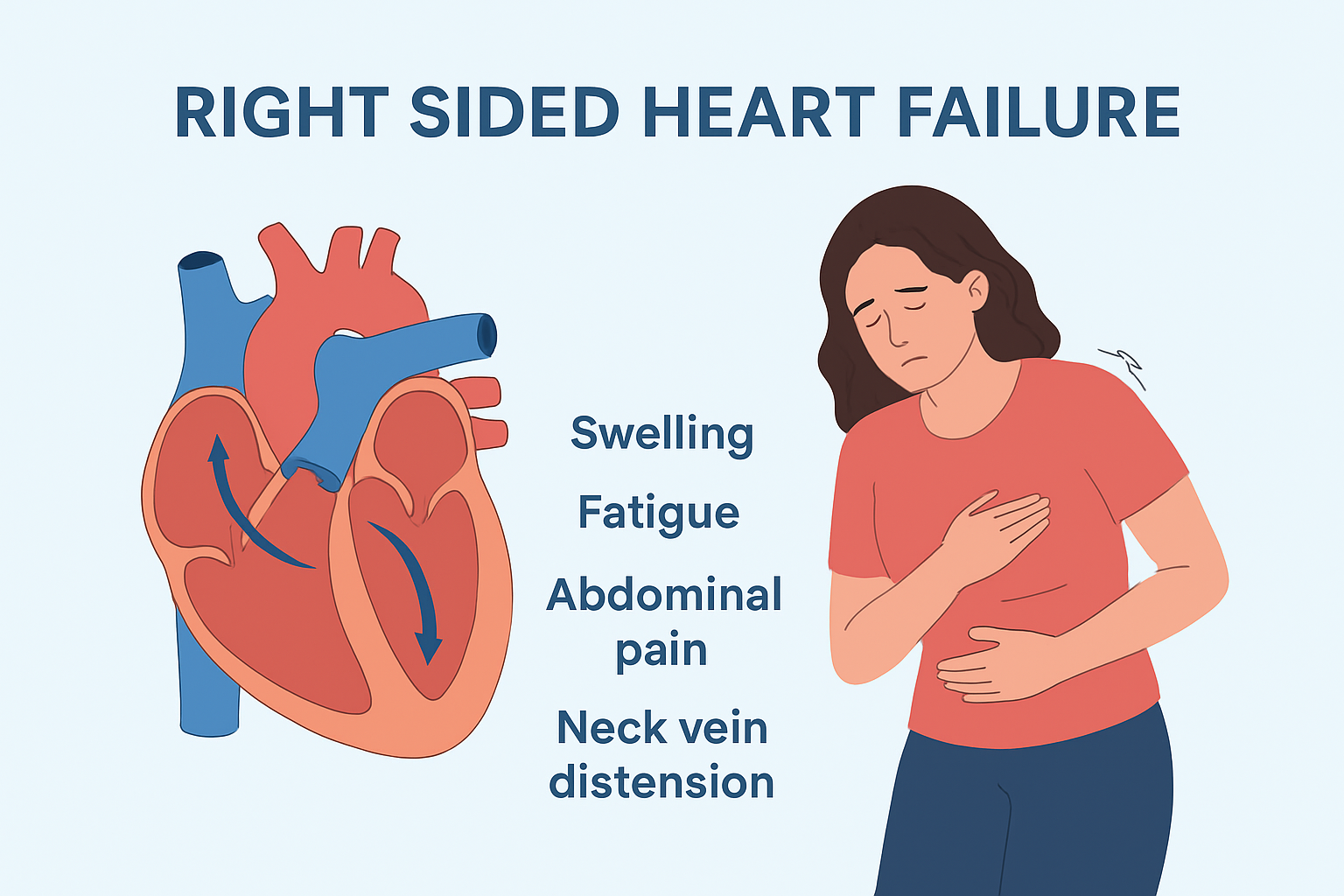
Right-sided heart failure is a condition where the right side of the heart cannot pump blood properly. The right ventricle usually sends blood to the lungs to pick up oxygen. However, when it weakens, blood starts to back up in the veins.
As a result, fluid begins to collect in the legs, abdomen, and other tissues. This condition can affect daily life and overall health. It also requires early attention for better outcomes.
What Is Right-Sided Heart Failure?
Right-sided heart failure happens when the right ventricle loses its pumping strength. The heart then struggles to move blood forward into the lungs. Therefore, pressure builds in the veins. This pressure shift leads to swelling in different parts of the body.
The condition often develops after left-sided heart failure. However, it may also appear on its own because of lung diseases or other heart problems.
The heart works as one unit. Therefore, a problem on one side can affect the other. This connection explains why many people experience symptoms on both sides over time. Right-sided failure is serious, yet it can be managed with proper care.
Common Causes of Right-Sided Heart Failure
Several conditions can weaken the right ventricle. Left-sided heart failure is the most common cause. When the left side fails, blood pressure in the lungs rises. The right ventricle must then work harder to push blood through. As a result, the right side begins to fail too.
Chronic lung diseases also contribute. Conditions like COPD or pulmonary hypertension increase pressure in the lung arteries. Therefore, the right ventricle becomes strained. Heart valve problems may also lead to this condition.
Tricuspid valve issues can cause blood leakage, which makes the heart work harder. Moreover, infections, congenital defects, and long-term high blood pressure may increase the risk.
Key Symptoms You Should Notice
Right-sided heart failure often shows symptoms in the body rather than the lungs. Swelling in the legs and feet is very common. This swelling occurs because blood pools in the veins. The fluid then leaks into the tissues. The abdomen may also swell. This condition is called ascites. It causes discomfort and a feeling of heaviness.
People may also notice weight gain due to fluid buildup. Fatigue appears because the heart cannot deliver enough oxygen-rich blood. The body then struggles to stay active. Moreover, the liver may enlarge due to congestion.
This condition can cause pain under the ribs on the right side. Veins in the neck may also look enlarged. These symptoms develop slowly but may worsen without treatment.
How Doctors Diagnose Right-Sided Heart Failure
Doctors start with a physical exam. They check swelling, neck veins, and liver size. They also listen to the heart and lungs. Blood tests help detect organ stress. An echocardiogram is very important. This test shows the heart’s pumping function. It also reveals valve problems or pressure changes.
An ECG checks the heart’s rhythm. A chest X-ray can show heart enlargement or fluid around the lungs. Doctors may also use MRI scans or stress tests. These tests give a clear picture of heart function. Early diagnosis helps doctors plan treatment effectively. It also improves long-term outcomes.
Treatment Options for Right-Sided Heart Failure
Treatment focuses on reducing fluid buildup and improving heart function. Doctors often prescribe diuretics. These medicines help remove extra fluid from the body. As a result, swelling decreases and breathing improves. ACE inhibitors and beta-blockers may also help. They improve blood flow and reduce the heart’s workload.
Lifestyle changes are important. People should reduce salt intake because salt holds water in the body. Therefore, lower salt helps prevent swelling. Regular, light exercise keeps the heart active. However, activity should be done under medical guidance. Weight monitoring is also useful. It helps detect fluid changes early.
Treating the underlying cause is essential. If lung disease is responsible, doctors treat it directly. If a valve problem exists, surgery may be needed. In severe cases, advanced therapies may be required. However, most people improve with consistent care and proper management.
Living With Right-Sided Heart Failure
Living with this condition requires awareness and regular monitoring. People must follow their treatment plan every day. They should watch for changes in swelling and breathing. Quick action can prevent complications. Emotional support is also important. Managing heart failure can be stressful. Therefore, staying connected with family and healthcare teams is helpful.
Diet plays a major role. Reducing salt, avoiding processed foods, and drinking adequate water may support better control. Moreover, good sleep and low stress improve heart health. People should also avoid smoking because it increases lung pressure. Alcohol should be limited as well since it weakens the heart.
Prevention and Early Care
Preventing right-sided heart failure begins with protecting the heart and lungs. Managing blood pressure is essential. Regular exercise also helps maintain heart strength. People with lung disease should follow medical advice strictly. Early care prevents stress on the right ventricle. Moreover, controlling diabetes and cholesterol lowers long-term risk.
Routine checkups help detect early changes. As a result, doctors can intervene sooner. Awareness makes a major difference. When people understand the signs, they respond quickly. This approach improves quality of life and long-term survival.
Conclusion
Right-sided heart failure is a serious, yet manageable condition. Early diagnosis and proper treatment improve daily life and long-term health. Simple lifestyle habits also support the heart and reduce symptoms. With consistent care, many people live active and fulfilling lives. Take action today, listen to your body, and speak with a doctor if symptoms appear. Your heart deserves attention, care, and steady support.
FAQs
What is the main cause of right-sided heart failure?
Left-sided heart failure is the most common cause. It increases pressure in the lungs, which strains the right ventricle.
Is right-sided heart failure curable?
The condition cannot be fully cured. However, it can be controlled with medicines, lifestyle changes, and early treatment.
What are the first signs of right-sided heart failure?
Early signs include swelling in the feet, fatigue, and weight gain due to fluid retention.
Can right-sided heart failure be prevented?
Good heart and lung care can help. Managing blood pressure, avoiding smoking, and regular checkups reduce the risk.
What happens if right-sided heart failure is not treated?
The condition worsens over time. Fluid buildup increases and other organs may be affected.
Left Side Heart Failure: Symptoms, Causes & Treatment Guide
https://newsarmour.com/left-side-heart-failure/
Reference
- American Heart Association – Heart Failure Overview
https://www.heart.org/en/health-topics/heart-failure - Mayo Clinic – Right-Sided Heart Failure Information
https://www.mayoclinic.org/diseases-conditions/heart-failure - Cleveland Clinic – Heart Failure Causes & Symptoms
https://my.clevelandclinic.org/health/diseases/17069-heart-failure - NHLBI – Heart Failure Facts and Treatment
https://www.nhlbi.nih.gov/health/heart-failure - MedlinePlus – Heart Failure Guide
https://medlineplus.gov/heartfailure.html