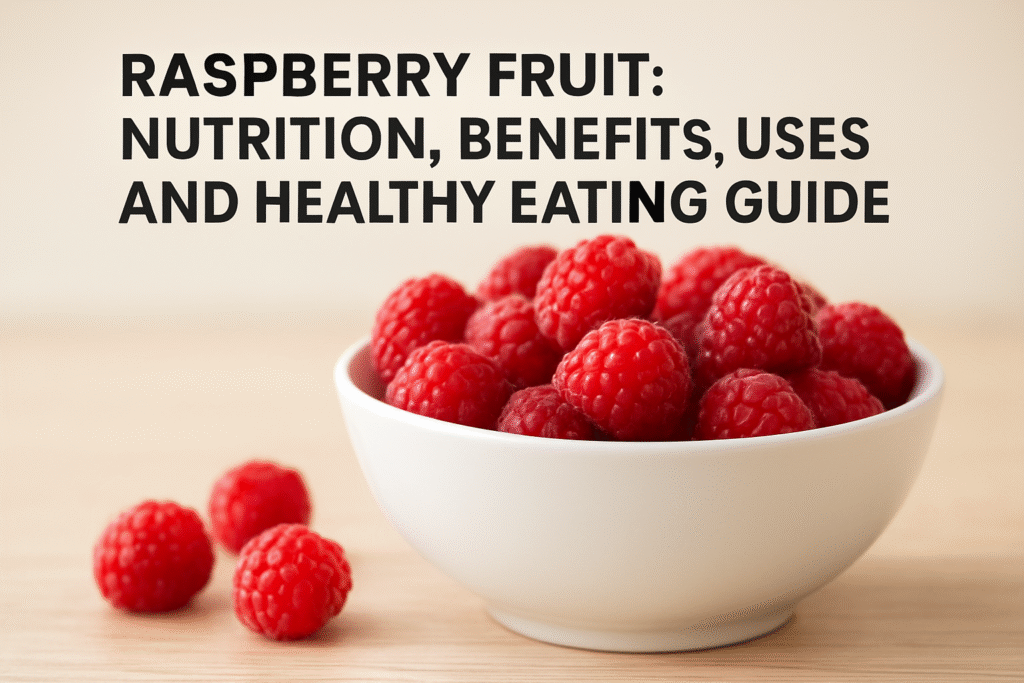
Raspberry is a bright and flavorful fruit that attracts attention with its rich color and gentle taste. It offers impressive nutrition and fits easily into daily meals. People enjoy it fresh, blended, or baked into recipes. It also supports overall wellness due to its powerful antioxidant profile. This guide explains its nutrition, benefits, and practical uses in simple language.
What Is Raspberry Fruit?
Raspberry is a soft and delicate fruit with a sweet and slightly tart flavor. It grows on shrubs that belong to the rose family. The fruit contains many small drupelets. Each drupelet has a tiny seed that adds to its texture. Red is the most common type, but black, purple, and yellow raspberries also exist.
Farmers grow raspberries in cool climates. The plant needs sunlight, water, and well-drained soil. Raspberries ripen quickly and spoil fast. Therefore, farmers harvest them often during the season. Fresh raspberries taste best when picked at peak ripeness. However, frozen options offer similar nutrition and stay fresh for longer periods.
Nutritional Profile of Raspberry Fruit
Raspberries provide strong nutrition in every serving. They contain vitamin C, vitamin K, manganese, and dietary fiber. They also offer antioxidants that protect cells from damage. Moreover, their low calorie count makes them suitable for balanced diets.
Fiber plays a major role in raspberry nutrition. It supports digestion and helps regulate blood sugar. Therefore, people who monitor glucose levels can include raspberries in their diet. The fruit also contains phytonutrients. These compounds support many functions and promote long-term health.
Raspberries also feature a low glycemic index. As a result, they release energy slowly and help maintain stable blood sugar. This quality makes them suitable for people who prefer slow-digesting foods.
Health Benefits of Raspberry Fruit
Raspberries support many aspects of health. Their antioxidant content protects the body from oxidative stress. These antioxidants include quercetin, ellagic acid, and anthocyanins. They reduce inflammation and improve cellular function. As a result, they contribute to better long-term health.
Raspberries also support heart health. The fiber in raspberries helps maintain healthy cholesterol levels. Their potassium content supports healthy blood pressure. Moreover, antioxidants protect blood vessels and improve overall circulation.
Raspberries also help with digestion. The high fiber content keeps bowel movements regular. It also supports a healthy gut environment. This balance improves comfort and reduces bloating.
Raspberries assist in weight management as well. They offer natural sweetness without excess calories. Their fiber increases satiety and reduces the urge to overeat. Therefore, people who want lighter snacks may find them helpful.
Raspberries also support skin wellness. Their vitamin C content promotes collagen formation. This supports firm and youthful skin. Antioxidants also help reduce signs of aging. They protect the skin from damage caused by environmental stress.
Raspberries and Antioxidants
Antioxidants are one of the fruit’s strongest features. Raspberries contain anthocyanins that give them their bright color. These compounds also reduce inflammation and protect brain function. Studies suggest that berries may support memory and focus. Although research continues, raspberries show promising results.
Raspberries also contain ellagic acid. This compound has strong protective effects on cells. It also helps reduce oxidative stress. Therefore, raspberries play an important role in long-term wellness.
How to Include Raspberries in Your Diet
Raspberries are easy to add to daily meals. You can enjoy them as a fresh snack. You can also mix them into smoothies for a refreshing drink. Frozen raspberries blend well and offer a convenient option.
Yogurt pairs well with raspberries. The fruit adds color, flavor, and nutrition. You can also add raspberries to oatmeal. This combination supports smooth digestion and offers long-lasting energy.
Raspberries also work well in baking. They add natural sweetness and moisture to cakes, muffins, and breads. Frozen raspberries hold their shape better during baking. They also distribute flavor evenly throughout the recipe.
You can also prepare simple sauces or purees. These toppings enhance pancakes, waffles, or desserts. Some people also add raspberry puree to salad dressings. This creates a fresh and tangy flavor.
Raspberries also enhance the taste of salads. They add a refreshing balance to vegetables, nuts, and leafy greens. Their gentle tang brightens each bite. Moreover, raspberries pair well with both sweet and savory dishes. This versatility makes them a popular choice in many kitchens.
Raspberry Fruit for Daily Wellness
Raspberries offer strong support for daily wellness. The fiber of raspberries improves digestive health. The antioxidants in raspberries protect cells and support immunity. Vitamins in Raspberries help to maintain skin health and energy levels. Moreover, their low calorie count makes them suitable for regular consumption.
Raspberries also add variety to meals. They bring color, texture, and freshness. Their flexible nature allows them to fit into simple or creative recipes. This variety encourages healthier eating habits.
Raspberries also support hydration. The fruit contains a high water percentage. This keeps the body refreshed and supports healthy digestion. Although raspberries are small, they offer impressive nourishment.
Choosing and Storing Raspberries
Fresh raspberries are delicate. Therefore, they require careful handling. You should choose berries that look bright and firm. Soft or mushy fruit may spoil quickly.
You should store fresh raspberries in the refrigerator. They stay fresh for only a few days. You can also freeze raspberries for later use. Frozen berries retain most of their nutritional value. They also work well in smoothies, baking, and sauces.
Wash raspberries only before eating. Washing them early may cause them to break down. Gentle handling helps keep the fruit fresh and intact.
Conclusion
Raspberry fruit stands out for its flavor, color, and nutrition. It supports the heart, digestion, skin, and overall wellness. Its antioxidants offer long-term benefits that strengthen the body. Moreover, the fruit fits naturally into many meals. You can enjoy it fresh, blended, baked, or mixed into daily recipes. Raspberries also encourage healthier eating habits and add variety to regular meals. You can include them more often and enjoy their gentle sweetness and strong nutrition. By making raspberries a part of your routine, you take a simple step toward better health and lasting wellness.
FAQs
1. Are raspberries good for daily consumption?
Yes. They offer fiber, antioxidants, and vitamins that support overall health.
2. Do raspberries help with digestion?
Yes. Their high fiber content supports healthy digestion and regular bowel movements.
3. Can people with diabetes eat raspberries?
Yes. They have a low glycemic index and can help maintain stable blood sugar levels.
4. Are frozen raspberries as healthy as fresh ones?
Yes. Frozen raspberries keep most of their nutrients and offer similar benefits.
5. How many raspberries should I eat in a day?
A small cup is enough for regular nutrition, but you can adjust based on your diet.
Grapefruit Benefits: Nutrition, Uses, and Side Effects
https://newsarmour.com/grapefruit-benefits/
Reference
- Harvard School of Public Health – Nutrition & Fruits
https://www.hsph.harvard.edu/nutritionsource/food-features/berries/ - USDA FoodData Central – Raspberry Nutrition
https://fdc.nal.usda.gov/fdc-app.html#/food-details/169911/nutrients - Cleveland Clinic – Health Benefits of Berries
https://health.clevelandclinic.org/health-benefits-of-berries/ - Medical News Today – Raspberries Overview
https://www.medicalnewstoday.com/articles/283079 - National Library of Medicine – Antioxidants in Berries
https://www.ncbi.nlm.nih.gov/pmc/articles/PMC4192874/