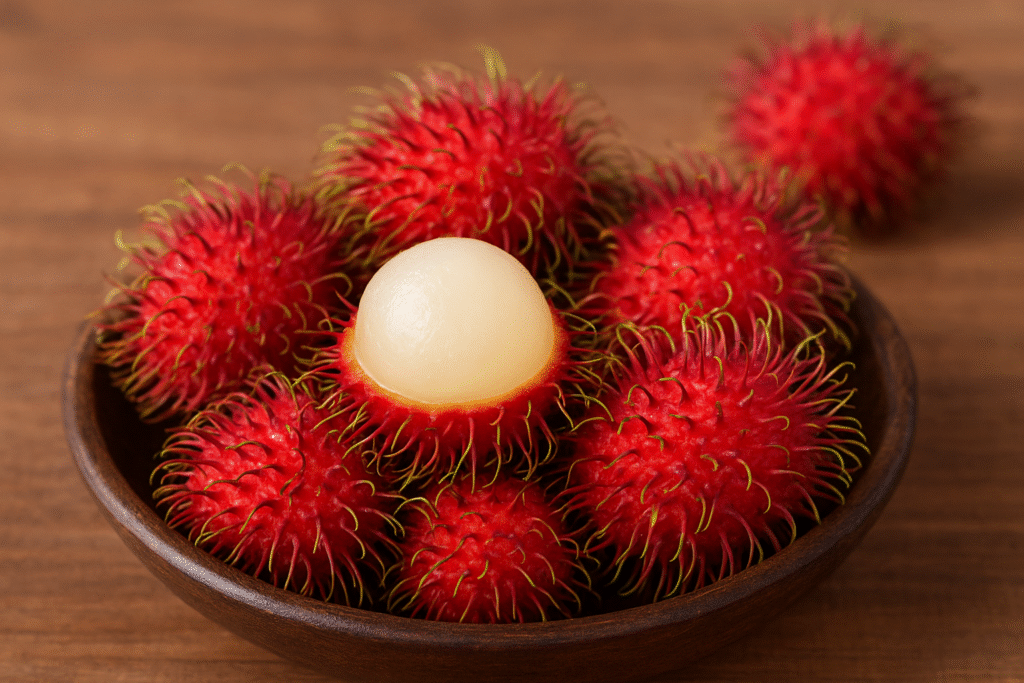
Rambutan is a colorful tropical fruit known for its bright red skin and soft, hair-like spikes. It looks unusual at first, yet it offers a sweet and refreshing taste. Many people enjoy it for its juicy flesh and rich nutritional value. The fruit grows widely in Southeast Asia, although it is now popular in many countries. It attracts attention for both its flavor and its impressive health benefits.
What Is Rambutan?
Rambutan belongs to the Sapindaceae family. It is closely related to lychee and longan. The fruit has a white, translucent pulp that surrounds a hard seed. Its taste is mildly sweet with a gentle floral touch. The texture is soft and juicy, which makes it ideal for snacks and desserts. Fresh rambutan is usually eaten raw. However, it is also used in juices, smoothies, and salads.
The fruit grows on large evergreen trees. These trees thrive in warm and humid climates. As a result, rambutan is found in tropical regions with rich rainfall. Farmers harvest the fruit in clusters, which adds to its appealing look.
Nutritional Value of Rambutan
Rambutan is rich in vitamins and minerals. It contains vitamin C, iron, copper, and small amounts of vitamin B. The fruit also offers antioxidants that protect the body from cellular damage. These nutrients support immunity and boost overall well-being.
Rambutan is low in calories, which makes it suitable for healthy diets. Its natural sugars provide quick energy without heaviness.
Moreover, rambutan contains fiber. This fiber supports digestion and promotes gut balance. It also helps regulate bowel movements and improves nutrient absorption. The fruit includes a good amount of water as well. Therefore, it helps maintain hydration on warm days.
Health Benefits of Rambutan
Rambutan offers many advantages for daily wellness. Each benefit makes the fruit a strong addition to modern diets.
Boosts Immunity
Rambutan is a strong source of vitamin C. This vitamin supports immune strength and protects the body from infections. It also enhances iron absorption, which improves energy levels. Regular intake of rambutan can help the body stay strong throughout the year.
Supports Digestive Health
The fiber in rambutan promotes smooth digestion. It keeps bowel movements regular and prevents constipation. Fiber also feeds good gut bacteria. As a result, the digestive system functions more efficiently.
Improves Skin Health
Rambutan contains antioxidants that reduce oxidative stress. These antioxidants protect skin cells from damage. They also support natural collagen production. As a result, the skin looks fresher and more youthful. Many people enjoy rambutan for its glow-enhancing properties.
Helps Hydration
The fruit has a high water content. Therefore, it helps maintain hydration. Proper hydration supports body temperature, digestion, and skin clarity. Rambutan offers a refreshing way to stay hydrated in hot weather.
Supports Weight Management
Rambutan is low in calories and high in fiber. This combination promotes fullness and reduces overeating. The natural sweetness satisfies cravings without heavy snacks. Many people include rambutan in their weight-balanced diets.
Boosts Iron Levels
The fruit contains iron and vitamin C. These nutrients work together to improve iron absorption. As a result, rambutan helps reduce tiredness linked to low iron. It also supports healthy red blood cell function.
How to Eat Rambutan
Rambutan is simple to enjoy. Peel the outer skin by gently squeezing the fruit. The soft flesh appears inside. Remove the seed before eating. The flavor is fresh and sweet. Many people eat it as a quick snack. However, rambutan also works well in fruit bowls and desserts.
You can add it to smoothies for a tropical twist. It blends well with mango, pineapple, and coconut. Rambutan pieces also add texture to salads. Chefs use it in sauces and mocktails for natural sweetness. Its versatility makes it a fun fruit for creative recipes.
Rambutan in Traditional Cultures
Rambutan has cultural importance in many Asian countries. Families enjoy it during festivals and family gatherings. Farmers consider it a symbol of abundance. Traditional healers also value rambutan for its natural qualities. They use different parts of the fruit, including the peel and seeds, for herbal preparations. These practices continue in many regions.
Buying and Storing Rambutan
Fresh rambutan should have bright red or yellow skin. The spiky hairs should look fresh and firm. Avoid fruits with dry or dark patches. These signs show that the fruit is old.
Store fresh rambutan in the refrigerator to keep it firm. It usually stays fresh for several days. You can also freeze rambutan for later use. Frozen rambutan works well in smoothies and desserts. However, fresh fruit offers the best taste and texture.
Is Rambutan Safe for Everyone?
Rambutan is safe for most people. However, moderation is important. Its natural sugar may affect people managing blood sugar levels. Therefore, individuals with diabetes should consume it carefully. The seed should never be eaten raw. It can be toxic. Always remove the seed before eating.
Pregnant and breastfeeding women can usually enjoy rambutan. However, they should consult a doctor if they have specific health concerns. Children can also eat rambutan, but adults must remove the seed for safety.
Sustainability and Cultivation
Rambutan farming relies on warm climates and balanced rainfall. Farmers follow sustainable methods to protect soil and water. Many farms support local communities by offering seasonal work. As demand for rambutan increases, growers promote eco-friendly practices. These practices help protect biodiversity and maintain soil nutrients.
Why Rambutan Deserves More Attention
Rambutan is still less known in many parts of the world. People seek fresh flavors and natural health benefits. Rambutan meets these needs with ease. It offers nutrition, taste, and versatility. Moreover, it supports hydration and digestion.
Its antioxidants add to modern wellness trends. As a result, rambutan is gaining a strong place in global fruit markets.
Frequently Asked Questions
What does rambutan taste like?
Rambutan has a sweet taste with a mild floral hint. Its texture is soft and juicy.
Can I eat rambutan every day?
Yes. You can enjoy it daily in moderate amounts. Its nutrients support general health.
Is rambutan good for weight loss?
Yes. Rambutan is low in calories and high in fiber. These qualities help with satiety.
Does rambutan improve skin health?
Yes. Its antioxidants protect skin cells and support a healthy glow.
Can diabetic individuals eat rambutan?
They can eat it in moderation. However, they must monitor sugar intake.
Conclusion
Rambutan is a delightful fruit with strong health benefits. Its sweet flavor, light texture, and impressive nutrients make it a valuable addition to modern diets. The fruit supports digestion, immunity, hydration, and skin health. Moreover, it offers a refreshing experience during warm seasons. You can enjoy it in many creative ways and include it in healthy recipes. Try adding rambutan to your routine and enjoy its natural goodness.
Passion Fruit Benefits: Nutrition, Uses, and Health Impact
https://newsarmour.com/passion-fruit-benefits/
Reference
- USDA Nutrition Database – Rambutan
https://fdc.nal.usda.gov - Healthline – Rambutan: Nutrition & Benefits
https://www.healthline.com/nutrition/rambutan - Medical News Today – Rambutan Facts & Health Benefits
https://www.medicalnewstoday.com/articles/rambutan - WebMD – Rambutan Overview
https://www.webmd.com/diet/health-benefits-rambutan - National Library of Medicine (NIH) – Antioxidant & Nutritional Studies
https://pubmed.ncbi.nlm.nih.gov