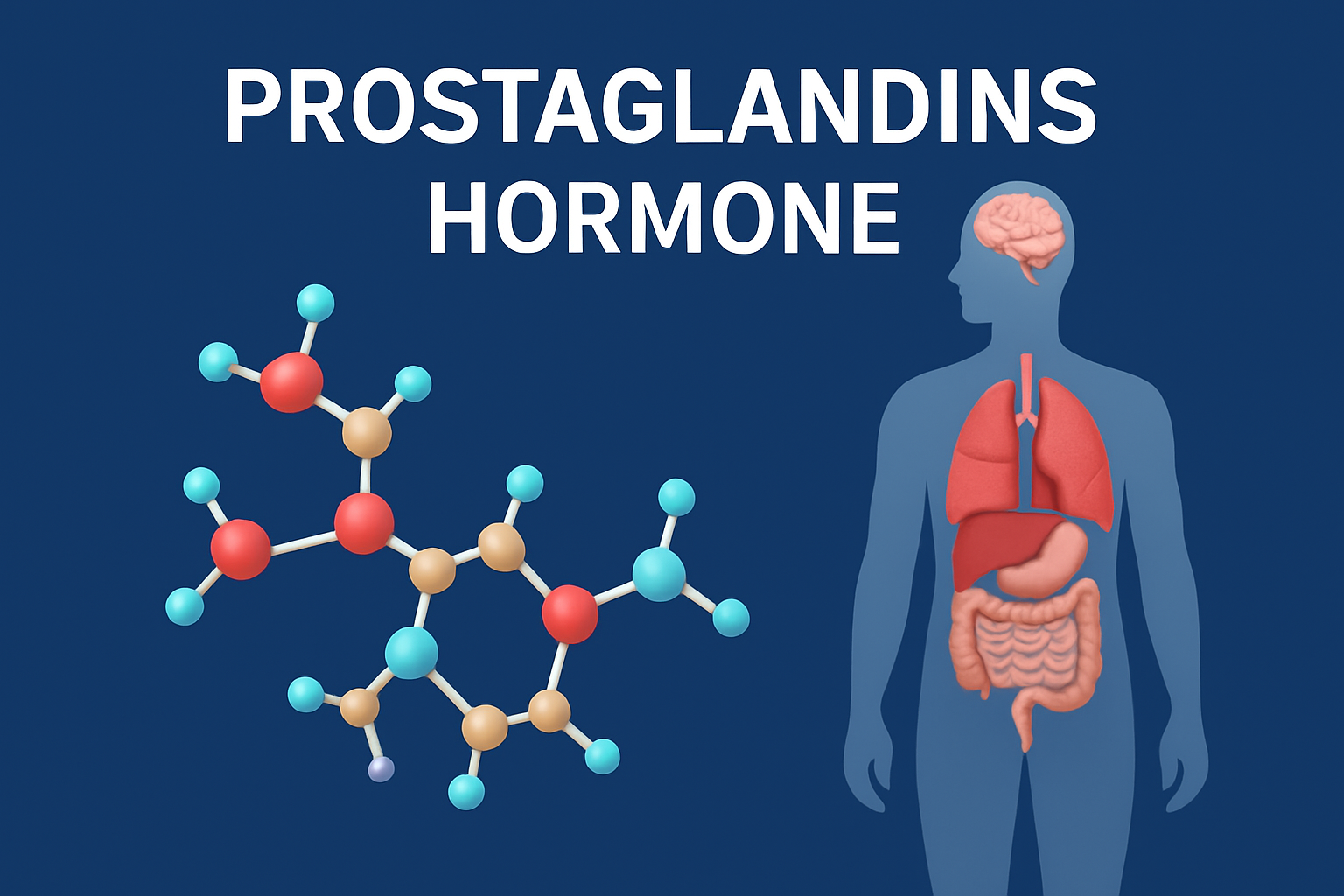
Prostaglandins are powerful hormone-like substances that play a major role in the human body. These compounds are present in almost every tissue. They act locally and respond quickly to changes in the internal environment. Although they are not classic hormones, they perform many hormonal functions. This makes them essential for daily health and body balance.
What Are Prostaglandins?
Prostaglandins are lipid compounds made from fatty acids. The body produces them when needed. Their action is short and limited to specific areas. Each type has a unique role, yet all support vital body functions. They work through receptors that trigger immediate responses.
They differ from normal hormones. Classic hormones travel through the bloodstream to distant organs. Prostaglandins act only at the site where they are produced. As a result, they offer quick and targeted responses.
How Prostaglandins Are Produced
The body forms prostaglandins from arachidonic acid. Enzymes convert this acid into different prostaglandin types. This process begins when cells detect injury, inflammation, or changes in body conditions. Therefore, their production increases during stress or illness.
Functions of Prostaglandins in the Body
Prostaglandins perform many roles. They support healing, regulate inflammation, and control smooth muscle activity. Their functions vary, and each type acts in a unique way.
1. Role in Inflammation
Prostaglandins are key players in the inflammation process. They cause swelling, heat, and redness during an injury. These reactions protect the body. They signal white blood cells to move to the affected area. However, excessive inflammation can cause pain or discomfort. Pain relievers reduce prostaglandin production, and therefore lower inflammation.
2. Role in Pain and Fever
Prostaglandins increase sensitivity to pain. They also raise body temperature when the brain detects infection. This natural fever response helps the body fight harmful microbes. Medicines like ibuprofen block prostaglandins. As a result, pain and fever reduce.
3. Role in Smooth Muscle Contraction
Prostaglandins help contract smooth muscles. They regulate muscles in the uterus, lungs, and intestines. For example, they help during labor. Doctors sometimes use synthetic forms to induce labor. They also influence airflow in the lungs. Therefore, they help maintain healthy breathing patterns.
4. Role in Reproductive Health
Prostaglandins are vital for reproductive functions. They regulate ovulation and menstrual flow. They also help prepare the uterus for pregnancy. During periods, they cause the uterus to contract and shed its lining. Excess levels may cause menstrual cramps. However, balanced prostaglandins ensure a smooth cycle.
5. Role in Blood Flow and Clotting
The body uses prostaglandins to control blood vessel dilation. Some types widen blood vessels. Others make them narrow. This balance maintains healthy blood pressure. They also influence clot formation. As a result, they help prevent excessive bleeding.
6. Role in Digestive Health
Prostaglandins protect the stomach lining. They help produce mucus that shields the stomach from acid. They also support healthy muscle movement in the gut. Therefore, they help maintain smooth digestion.
Types of Prostaglandins
The body produces several prostaglandin types. Each type has a unique role and specific effect.
Prostaglandin E (PGE)
PGE helps regulate inflammation and fever. It also supports reproductive functions and protects the stomach lining.
Prostaglandin F (PGF)
PGF controls uterus contractions. It plays a strong role during labor and menstruation.
Prostaglandin I (PGI)
PGI widens blood vessels. It prevents blood clot formation. As a result, it improves blood flow.
Prostaglandin D (PGD)
PGD helps regulate sleep and allergic responses. It supports the immune system during stress.
Prostaglandins in Women’s Health
Prostaglandins strongly influence female reproductive health. Their levels change during the menstrual cycle. Mild cramps are normal because prostaglandins help the uterus shed its lining. However, high levels may cause severe pain. Doctors may prescribe medication to balance their levels.
These medicines reduce pain by blocking prostaglandin production. Moreover, prostaglandins also support fertility. They help release the egg during ovulation.
During pregnancy, they help soften the cervix. They also prepare the uterus for labor. Therefore, doctors use synthetic prostaglandins to induce delivery when required.
Prostaglandins and Heart Health
Prostaglandins help maintain healthy blood flow. They regulate blood vessel diameter and clotting. A balanced prostaglandin level protects the heart. However, an imbalance may increase the risk of blood clots. Lifestyle habits also affect these levels. Regular exercise and a healthy diet support natural prostaglandin production.
Prostaglandins and Medicines
Many medicines target prostaglandins. Painkillers block enzymes that make them. This reduces pain, swelling, and fever. Some doctors prescribe prostaglandin analogues. These are synthetic versions used for stomach protection, labor induction, and glaucoma treatment. Therefore, prostaglandins are useful in both natural and medical settings.
Health Conditions Linked to Prostaglandins
Changes in prostaglandin levels can cause health issues. Painful periods, asthma, stomach ulcer risk, and inflammation disorders are linked to abnormal levels. However, proper treatment can help restore balance. A healthy lifestyle also supports natural regulation.
Diet and Lifestyle Influence
Your diet affects prostaglandin production. Healthy fats help the body make beneficial prostaglandins. Omega-3 fatty acids found in fish, nuts, and seeds support this process. They also reduce harmful inflammation. Proper hydration, regular movement, and low stress help balance hormone-like compounds. As a result, the body maintains better health.
When to Consult a Doctor
Persistent pain, severe menstrual cramps, unusual bleeding, or chronic inflammation may signal prostaglandin imbalance. A doctor can suggest tests and treatments. Early action helps prevent complications.
Conclusion
Prostaglandins are powerful and essential hormone-like compounds. They support healing, protect organs, and guide many body processes. Although they act locally, their impact is broad and meaningful. Understanding their functions helps you make informed health choices.
You can support natural prostaglandin balance through healthy habits and mindful care. Take steps toward better wellness, and allow your body to work smoothly and naturally.
FAQs
What are prostaglandins?
They are hormone-like compounds made from fatty acids. They act locally to regulate inflammation, blood flow, and muscle activity.
Why do prostaglandins cause pain?
They increase sensitivity in nerves during injury or infection. As a result, you feel pain or discomfort.
Are prostaglandin levels linked to periods?
Yes. They control uterus contractions. High levels may cause severe cramps.
Do medicines block prostaglandins?
Pain relievers and anti-inflammatory drugs block prostaglandin production. This reduces pain, fever, and swelling.
Can lifestyle changes improve prostaglandin balance?
Healthy fats, exercise, and stress control support natural prostaglandin production.
Melatonin Hormone: Functions, Benefits, and Sleep Impact
https://newsarmour.com/melatonin-hormone-benefits-2/
Reference
- MedlinePlus – Prostaglandins
https://medlineplus.gov/ency/article/003370.htm - Cleveland Clinic – Prostaglandins Overview
https://my.clevelandclinic.org/health/body/prostaglandins - Healthline – What Are Prostaglandins?
https://www.healthline.com/health/prostaglandins - Britannica – Prostaglandin Hormones
https://www.britannica.com/science/prostaglandin - NIH – Prostaglandins and Inflammation Research
https://www.ncbi.nlm.nih.gov/books/NBK553106/