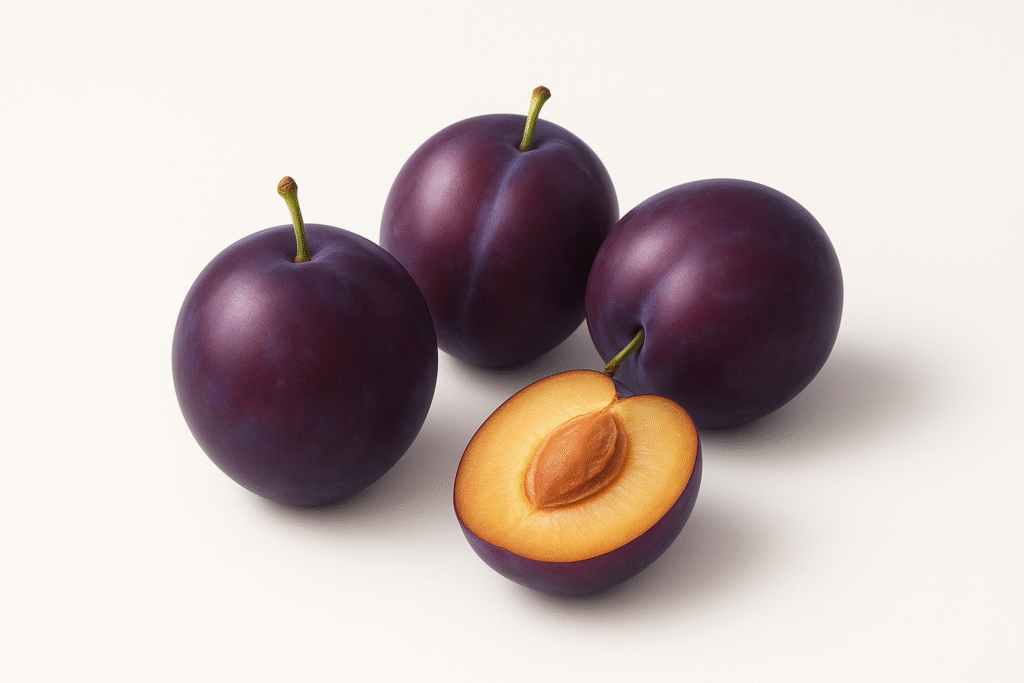
Plum fruit is a juicy and refreshing fruit enjoyed around the world. It comes in different colors and flavors. Some plums taste sweet, while others taste slightly tart. This fruit has a soft texture and a pleasant aroma. People enjoy it fresh, dried, or in cooked dishes. Many cultures also use plums for traditional wellness practices.
What Are Plums?
Plums are stone fruits. They belong to the same family as peaches, cherries, and apricots. Each plum has a single hard pit inside. The skin is smooth and thin. The flesh feels soft and sweet when ripe. You can find plums in red, purple, yellow, and green shades.
Plums grow in many parts of the world. Farmers prefer warm and dry climates for better growth. Therefore, the fruit becomes widely available during summer. Many stores also sell it frozen or dried throughout the year. The dried version is known as prunes. Prunes are helpful for digestion due to their fiber content.
Nutritional Value of Plum Fruit
Plums provide many nutrients. The fruit contains vitamins, minerals, fiber, and antioxidants. It offers vitamin A, vitamin C, and vitamin K. It also contains potassium and small amounts of iron. These nutrients support overall health. The fruit also has natural sugars that give quick energy. However, it remains low in calories, which makes it a good snack.
Plums also contain plant compounds. These compounds reduce oxidative stress. They also protect cells from damage. As a result, plums support long-term wellness.
Health Benefits of Plums
Good for Digestion
Plums support healthy digestion. They contain fiber that softens stool. This fiber also improves bowel movement. Moreover, prunes act as a natural remedy for constipation. Many people use them to maintain regularity. Therefore, plums are a smart choice for gut health.
Supports Heart Health
Plums may help the heart. They contain antioxidants that reduce inflammation. These compounds also protect blood vessels. As a result, they can support healthy blood flow. Potassium in plums also helps control blood pressure. This mineral balances fluids in the body. Regular intake may therefore support a healthy heart.
Helps in Blood Sugar Control
Plums can support stable blood sugar levels. They have a low glycemic index. This means the fruit releases sugar slowly. Therefore, you feel energized without sudden spikes. The fiber also slows digestion. As a result, the body absorbs glucose more steadily.
Boosts Immunity
Plums contain vitamin C. This vitamin strengthens the immune system. It helps the body fight infections. It also supports wound healing. Moreover, antioxidants in plums protect cells from free radicals. These compounds reduce stress on the immune system. Therefore, plums help your body stay strong.
Supports Healthy Skin
Plums can improve skin health. The antioxidants fight premature aging. Vitamin C helps produce collagen. This protein keeps skin firm. Hydrating compounds also keep the skin fresh. Therefore, regular intake of plums may give a natural glow.
Helps With Weight Management
Plums are low in calories. They also contain fiber that keeps you full. As a result, you avoid overeating. The natural sweetness of plums also reduces cravings. Therefore, this fruit supports weight goals. Many people choose plums as a healthy snack.
Improves Bone Health
Plums may support strong bones. They contain vitamin K, potassium, and antioxidants. These nutrients help the body maintain bone density. Some studies also show that prunes may reduce bone loss. Therefore, plums can be a useful addition for long-term bone care.
Different Types of Plums
People enjoy many types of plums. Some varieties are juicy. Others are firm and crisp. Japanese plums are large and round. European plums are smaller and oval. Yellow plums taste sweet. Red plums offer a mild tart flavor. Green plums taste sour when unripe. Each type has its own charm. However, all varieties provide health benefits.
How to Eat Plums
You can eat plums in many ways. Fresh plums taste great as a snack. Many people also add them to salads. Smoothies become colorful and sweet with plums. You can also use plums in jams, sauces, and desserts. Cooked plums bring a rich flavor to dishes. Prunes also work well in baking.
Wash plums before eating. Ripe plums feel soft to the touch. You do not need to peel them. The skin contains valuable nutrients. Simply remove the pit while eating.
How to Choose and Store Plums
Choose plums that feel slightly soft. A sweet aroma also signals ripeness. Firm plums will ripen at home. You can store ripe plums in the refrigerator. They stay fresh for a few days. However, unripe plums do better at room temperature. Keep them away from direct sunlight.
Side Effects of Plums
Plums are safe for most people. However, eating too many may cause digestive upset. This happens due to the high fiber content. Some people may also experience gas or bloating. Moreover, prunes contain natural sugar alcohol. This compound may cause loose stools in excess. Therefore, moderate intake is best.
People with certain conditions should also be careful. Those with kidney problems may need to monitor potassium levels. Diabetics can enjoy plums but should control portion size. It is always better to consult a doctor for personal advice.
Conclusion
Plum fruit is a delicious, nutritious, and versatile fruit. It adds color, flavor, and health benefits to your daily diet. The fruit supports digestion, immunity, heart health, and skin wellness. It also helps with weight goals and bone strength. Moreover, plums are easy to enjoy in many dishes.
You can start adding plums to your meals today. Small changes often create powerful results. A healthier lifestyle becomes easier when you choose natural foods. Therefore, make plums a regular part of your diet and enjoy their refreshing taste.
Frequently Asked Questions
Are plums good for daily eating?
Yes, plums are safe for daily eating. They provide fiber and nutrients.
Do plums help with constipation?
Yes, plums and prunes support healthy bowel movement.
Can diabetics eat plums?
Yes, but portion control is important.
Are prunes and plums the same?
Prunes are dried plums. Both offer similar benefits.
How many plums should I eat in a day?
One to two plums per day is enough for most people.
Peach Fruit Benefits: Nutrition, Uses, and Healthy Advantages
https://newsarmour.com/peach-fruit-benefits/
Reference
- USDA FoodData Central – Plum Nutrition
https://fdc.nal.usda.gov/ - Cleveland Clinic – Benefits of Eating Plums
https://health.clevelandclinic.org/plums-prunes-benefits/ - Harvard T.H. Chan School of Public Health – Fruit Nutrition Information
https://www.hsph.harvard.edu/nutritionsource/fruit/ - National Institutes of Health (NIH) – Vitamin C and Potassium Info
https://ods.od.nih.gov/ - WebMD – Plums and Prunes Health Benefits
https://www.webmd.com/diet/health-benefits-plums-prunes