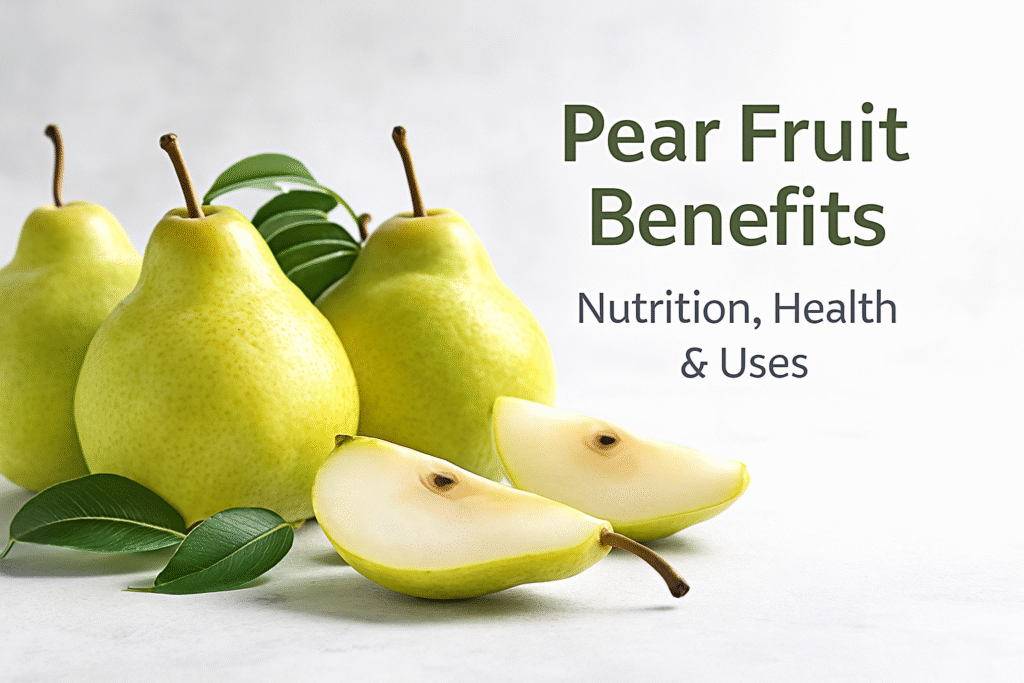
Pears are among the most loved fruits across the world. Their mild sweetness and soft texture make them suitable for all age groups. Pears also offer impressive health benefits. Many people include them in their daily diet because they support digestion, boost immunity, and improve heart health.
This blog explains everything you need to know about pears in clear and simple language. It also helps you understand why this fruit deserves a place in your kitchen.
What Makes Pears Special
Pears come in different shapes and colors. Each variety offers a unique taste and texture. They grow in many parts of the world, and farmers harvest them during specific seasons. Most pears have thin skin, juicy flesh, and a grainy texture. Their light flavor allows them to blend well with many recipes. Pears also provide natural sweetness without adding extra calories.
Moreover, this fruit is rich in fiber. It supports smooth digestion and prevents constipation. The fiber also helps you feel full for longer hours. As a result, pears support healthy weight management. They also suit people who want a low-fat and nutrient-rich snack.
Nutritional Value of Pears
Pears contain vitamins, minerals, and antioxidants. These nutrients help your body stay strong and healthy. They also protect your cells from oxidative stress. Pears offer vitamin C, vitamin K, potassium, and copper. These nutrients play an important role in your overall wellness. Vitamin C boosts immunity. Vitamin K supports bone strength. Potassium keeps your heart healthy by regulating your blood pressure.
Furthermore, pears are hydrating. They contain a high amount of water. This helps maintain fluid balance in your body. Therefore, pears serve as a refreshing fruit during hot days. Their natural sugars also offer quick energy without causing sudden spikes in blood glucose.
Health Benefits of Eating Pears
Supports Digestive Health
Pears promote healthy digestion. Their high fiber content improves bowel movement. It also supports gut health by feeding good bacteria. Many experts advise adding pears to your diet if you have digestive issues. However, you should eat them in moderation if you have sensitivity to fiber.
Good for Heart Health
Pears are heart-friendly. Potassium helps regulate heartbeat and blood pressure. The fiber in pears reduces bad cholesterol. As a result, your risk of heart disease may reduce. Pears also contain antioxidants that protect your heart from inflammation.
Boosts Immunity
Pears provide vitamin C, which helps your immune system function well. This vitamin supports wound healing and protects your body from infections. Pears also contain antioxidants that fight harmful free radicals. Therefore, regular consumption of pears helps strengthen your defenses.
Helps in Weight Control
Many people choose pears during weight-loss programs. Their high fiber content helps control hunger. They also have fewer calories compared to many snacks. Moreover, pears offer natural sweetness. This helps you reduce your cravings for sugary foods.
Supports Hydration
Pears have a high water content. They keep your body hydrated. This is especially important during summer. Hydration supports your skin, digestion, and energy levels.
Different Ways to Enjoy Pears
Eat Them Fresh
Fresh pears taste sweet and juicy. You can eat them as a quick snack. You can also pair them with yogurt or nuts. This combination provides protein, fiber, and healthy fats.
Add Them to Salads
Pears add a sweet flavor to salads. They also pair well with leafy greens. You can add cheese, nuts, or seeds for extra texture. The freshness of pears improves the overall taste of simple salads.
Use Them in Desserts
Pears work well in baking. You can use them in cakes, pies, or tarts. Their natural sweetness reduces the need for extra sugar. They also soften during cooking and add moisture to desserts.
Blend Them Into Smoothies
Pears make smoothies creamy. You can mix them with bananas, berries, or spinach. Their mild flavor blends easily with most fruits. Smoothies also help you consume more nutrients in a simple form.
How to Choose and Store Pears
Many people find it hard to choose ripe pears. A ripe pear is soft near the stem. It gives a gentle response when pressed lightly. However, unripe pears feel firm. You can ripen them at room temperature. Place them in a paper bag to speed up the ripening process.
Store ripe pears in the refrigerator. This slows the ripening and keeps them fresh for a few days. Always wash pears before eating them. Their thin skin may collect dust or pesticides. You can peel them if needed, but the skin contains most of the fiber.
Pears in Daily Diet
You can use pears in breakfast, lunch, or dinner. They blend well with cereals, smoothies, and salads. They also make a light evening snack. Pears can be cooked, baked, or enjoyed raw. Therefore, they offer flexibility in meal planning.
Many people prefer pears as a pre-workout snack. Their natural sugars provide quick fuel. They also hydrate your body before exercise. Pears also suit children because they are soft and easy to chew.
Sustainability and Pear Farming
Pears support sustainable agriculture. They require fewer resources compared to many fruits. Farmers grow pears in different climates. This makes them widely available. Pear orchards also support biodiversity. However, climate change may affect their production in the future.
Consumers should support responsible farming practices. Choosing organic pears helps reduce exposure to chemicals. It also promotes healthier farming methods. Moreover, buying local pears reduces the carbon footprint of transportation.
Conclusion
Pears are simple, delicious, and full of nutrients. They support digestion, heart health, immunity, and hydration. They also fit into many recipes and daily meals. Pears provide a healthy balance of sweetness and nutrition. As a result, they make an excellent choice for people of all ages.
You can start adding pears to your routine today. Their benefits will support your health in the long run. Enjoy them fresh or mix them into your favorite dishes. Let this gentle and flavorful fruit be a part of your healthy lifestyle.
FAQs
1. Is it good to eat pears every day?
Yes. Pears offer fiber, vitamins, and antioxidants that support daily health.
2. Are pears good for digestion?
Yes. Their high fiber content improves bowel movement and supports gut health.
3. Can people with diabetes eat pears?
Yes. Pears have natural sugars and a low glycemic index. They help maintain steady blood sugar levels.
4. Should pears be eaten with or without skin?
You can eat them with skin because it contains most of the fiber and nutrients. Wash them well before eating.
5. When is the best time to eat pears?
You can eat pears at any time of the day. They work well as snacks, breakfast add-ons, or dessert ingredients.
Apricot Fruit Benefits: Nutrition, Uses & Health Facts
https://newsarmour.com/apricot-fruit-benefits/
Reference
- Cleveland Clinic “5 Reasons Pears Are Good for You” — https://health.clevelandclinic.org/benefits-of-pears Cleveland Clinic
- Healthline “9 Health and Nutrition Benefits of Pears” — https://www.healthline.com/nutrition/benefits-of-pears Healthline
- Verywell Fit “Pears Nutrition Facts and Health Benefits” — https://www.verywellfit.com/pears-nutrition-facts-calories-and-health-benefits-4114350 Verywell Fit
- WebMD “Pears and Diabetes: Benefits, Risks, and Nutrition” — https://www.webmd.com/diabetes/pears-diabetes-benefits-risks-nutrition WebMD
- USU / Extension article “How to Preserve Pears” (for storage tips) — https://extension.usu.edu/preserve-the-harvest/research/pears extension.usu.edu