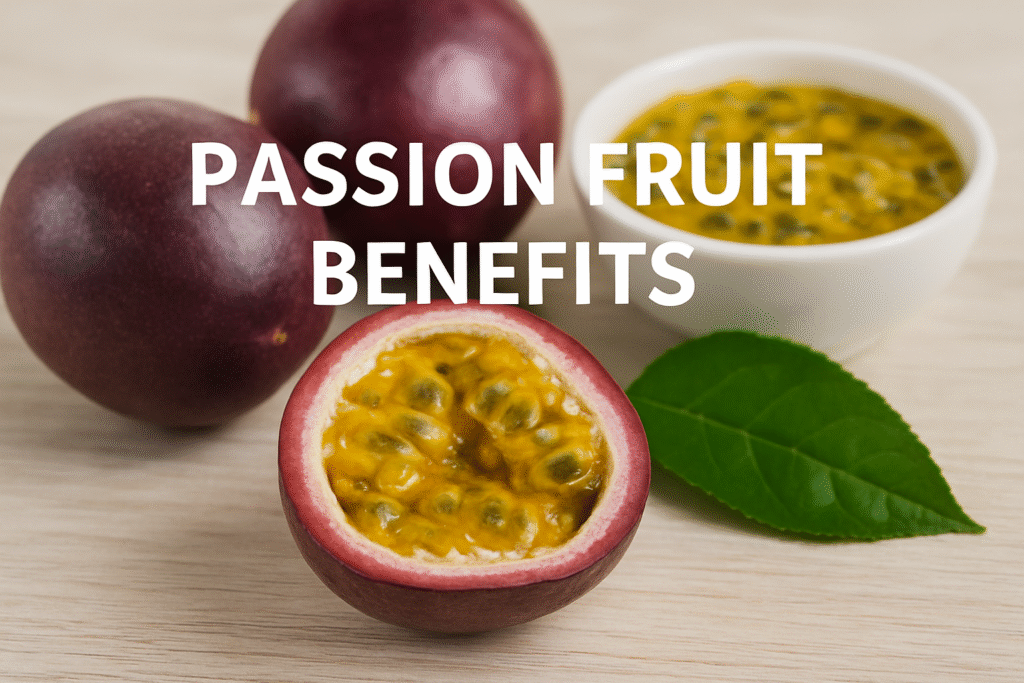
Passion fruit is a tropical fruit known for its strong aroma and rich taste. It offers a sweet and tangy flavor that feels refreshing in every bite. It also provides many health benefits because it is packed with nutrients. As a result, it has become a popular choice among people who prefer natural and healthy foods.
What Is Passion Fruit
Passion fruit comes from the Passiflora vine. It grows mainly in warm regions and develops a thick purple or yellow skin. The inside contains juicy pulp with many edible seeds. The fruit may look simple, yet it delivers a unique taste and a high nutrition value.
The fruit is rich in vitamin C, vitamin A, antioxidants, and fiber. These nutrients support immune health and improve digestion. Moreover, they help protect the body from oxidative stress.
Nutritional Value of Passion Fruit
Passion fruit contains a strong mix of vitamins and minerals. It offers vitamin C, vitamin A, potassium, and magnesium. These nutrients play important roles in maintaining healthy skin, heart function, and overall body balance.
The fruit also provides plant-based antioxidants. These compounds help the body fight free radicals. As a result, cells receive better protection from damage. The fiber content also supports gut health and improves bowel movement.
Health Benefits of Passion Fruit
Rich in Antioxidants
Passion fruit is loaded with antioxidants. These helpful compounds reduce inflammation in the body. They also support the immune system and protect cells. Therefore, regular intake of passion fruit may promote long-term wellness.
Supports Digestive Health
The fruit contains a high amount of dietary fiber. Fiber supports smooth digestion. It also helps prevent constipation and keeps the gut healthy. Moreover, fiber helps maintain a steady blood sugar level by slowing digestion.
Boosts Immunity
Passion fruit offers a generous amount of vitamin C. This vitamin strengthens immunity and supports the body’s defense system. As a result, it becomes easier for the body to fight infections.
Improves Heart Health
Passion fruit supports heart health in many ways. The potassium in the fruit helps maintain normal blood pressure. It also supports healthy blood flow. Moreover, the antioxidants in passion fruit reduce oxidative stress, which plays a key role in heart protection.
Good for Skin Health
The fruit contains vitamin A and other skin-friendly nutrients. These vitamins help maintain soft and glowing skin. They also support cell repair and improve skin texture. Therefore, passion fruit can be a helpful choice for natural skin care.
Helps Reduce Stress
Passion fruit includes plant compounds that support relaxation. These compounds calm the mind and reduce stress levels. As a result, passion fruit can be a refreshing addition to your diet during busy days.
How to Eat Passion Fruit
You can eat passion fruit in many simple ways. Cut the fruit, scoop out the pulp, and enjoy it fresh. This is the most common and natural method. However, you can also add the pulp to smoothies for a richer texture.
The fruit also works well in desserts. It enhances the flavor of yogurt, cakes, and puddings. Moreover, passion fruit juice is a popular option because of its bright and tangy taste. Many people add it to salad dressings for a tropical twist.
Passion Fruit in Daily Diet
Adding passion fruit to the daily diet is easy. You can include it in breakfast bowls for a healthy start. Some people prefer mixing it with oats or protein shakes. This provides natural sweetness without extra sugar. Moreover, passion fruit pairs well with other tropical fruits such as mango and pineapple.
It also works well in savory dishes. Chefs often use passion fruit pulp to create tangy sauces. These sauces go well with fish, chicken, or grilled vegetables. As a result, passion fruit becomes a versatile ingredient in various recipes.
Passion Fruit and Weight Management
Passion fruit supports weight management because it is low in calories and high in fiber. The fiber content increases fullness. It also reduces overeating. Therefore, it becomes easier to maintain a healthy eating pattern.
The fruit also provides natural sweetness. This can help reduce cravings for processed sweets. Moreover, the vitamins in the fruit support metabolic health. A strong metabolism plays a key role in healthy weight maintenance.
Possible Side Effects
Passion fruit is generally safe for most people. However, some individuals may be allergic to it. These reactions are rare but possible. Therefore, it is wise to consume a small amount first if you are trying it for the first time.
People with latex allergy may also react to passion fruit because they share similar proteins. Consult a doctor if you notice itching or swelling after eating the fruit. Also, eat passion fruit in moderation to avoid stomach discomfort.
How to Choose and Store Passion Fruit
Choose passion fruits that feel heavy for their size. A wrinkled skin is a sign of ripeness. Smooth-skinned fruits may take more time to ripen. However, both types offer good flavor.
You can store ripe fruits in the refrigerator for up to one week. If the fruit is not ripe, keep it at room temperature. It will soften naturally within a few days. Moreover, you can freeze the pulp if you want to store it for longer.
Environmental Benefits
Passion fruit farming supports sustainable agriculture. The plant grows well in tropical climates with limited chemical use. Moreover, the vines help protect soil from erosion. As a result, passion fruit becomes an eco-friendly option for farmers and consumers.
Conclusion
Passion fruit is a flavorful and nutritious tropical fruit. It offers impressive health benefits and fits easily into many recipes. Moreover, its high vitamin and antioxidant content supports overall wellness. You can enjoy it fresh, blend it into drinks, or add it to desserts. Each method delivers a refreshing burst of taste and nutrition. Consider adding passion fruit to your weekly diet and enjoy its natural goodness.
FAQs
Is passion fruit good for weight loss
Yes. Passion fruit is low in calories and rich in fiber. It supports fullness and reduces overeating.
Can we eat passion fruit seeds
Yes. The seeds are edible and safe. They also add crunch and provide extra fiber.
How many passion fruits can I eat daily
One to two fruits per day are usually enough. This amount provides nutrients without discomfort.
Is passion fruit safe during pregnancy
Passion fruit is generally safe. However, it is better to consult a doctor if you have allergies.
Can passion fruit increase immunity
Yes. It contains vitamin C and antioxidants. These nutrients strengthen the immune system.
Honeydew Fruit Benefits: Nutrition, Uses, and Healthy Facts
https://newsarmour.com/honeydew-fruit-benefits/
Reference
- Healthline – Passion Fruit Nutrition & Benefits
https://www.healthline.com/nutrition/passion-fruit - Medical News Today – Passion Fruit: Benefits and Nutrients
https://www.medicalnewstoday.com/articles/324815 - USDA FoodData Central – Passion Fruit Nutrient Profile
https://fdc.nal.usda.gov/fdc-app.html#/food-details/169910/nutrients - Cleveland Clinic – Healthy Fruits and Their Benefits
https://health.clevelandclinic.org/healthy-fruits-list - WebMD – Antioxidants and Their Health Benefits
https://www.webmd.com/diet/antioxidants-overview