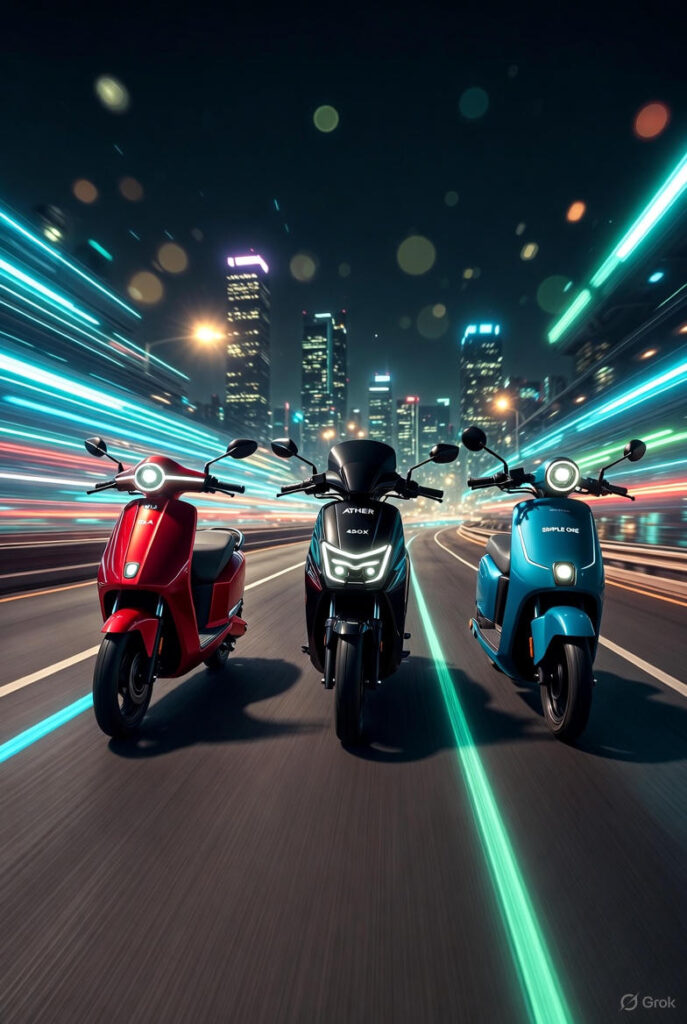
India’s electric scooter market is witnessing a dramatic transformation. Over the past few years, urban commuters have shifted toward clean and smart mobility. Rising fuel prices and government incentives have further fueled this change. Among many players, three brands have emerged as strong leaders — Ola Electric, Ather Energy, and Simple One. Each has built a loyal following and unique identity in this rapidly evolving space.
This competition is not only about speed or range. It’s about shaping the future of sustainable mobility in India. Therefore, understanding how these three brands differ can reveal where the industry is headed next.
Ola Electric — Ambition and Scale
Ola Electric entered the EV market with big dreams and bold execution. The company leveraged its strong brand from the ride-hailing business to launch electric scooters that could appeal to the masses. Models like the Ola S1 Air and S1 Pro have captured wide attention.
The main advantage of Ola Electric lies in its massive manufacturing capability. The “Futurefactory” in Tamil Nadu is one of the largest two-wheeler plants in the world. This scale allows Ola to produce scooters at competitive prices and innovate faster.
Moreover, Ola offers an impressive software experience. The touchscreen dashboard, keyless unlock, and OTA updates make its scooters feel futuristic. However, early reliability concerns and after-sales service have drawn mixed reviews. The company has since worked on improving support networks and customer trust.
As a result, Ola continues to dominate in sales volume and brand visibility. Its aggressive pricing and constant updates keep it ahead in the public eye.
Ather Energy — Innovation and Reliability
Ather Energy stands out for its engineering excellence and product reliability. Founded in Bengaluru, the company’s approach focuses more on precision than mass production. The Ather 450 series is known for premium quality, smooth ride experience, and advanced connectivity.
Unlike many competitors, Ather has built a strong charging network called Ather Grid. This gives riders confidence to travel longer distances without range anxiety. The company also ensures frequent software updates, improving performance and efficiency over time.
Moreover, Ather’s scooters are designed with balanced power and durability. They may cost slightly more, but users often praise the reliability and build quality. The attention to detail, even in smaller elements like throttle response and battery management, sets Ather apart.
However, Ather faces challenges in scaling production and expanding nationwide. Its focus on quality sometimes slows growth. Yet, this strategy has built a loyal customer base that values long-term dependability.
Therefore, Ather remains the go-to choice for those who prefer refinement and trust over aggressive features.
Simple One — The Challenger with Big Promises
Simple Energy entered the EV race with high ambitions. The Bengaluru-based startup made headlines with its first model, the Simple One. It promised a stunning range of over 200 kilometers on a single charge, which immediately drew attention from enthusiasts.
Performance-wise, the Simple One offers quick acceleration and a sporty design. It targets riders who want both practicality and excitement. The scooter also boasts dual battery options, fast charging, and a modern touchscreen display.
However, the brand’s journey has not been easy. There have been delays in deliveries and production scaling. Many potential buyers are still waiting for consistent availability across cities. Despite that, the company continues to refine its product and build trust among early adopters.
Moreover, Simple Energy’s focus on range and battery technology could become a game changer. If executed well, it might challenge even the strongest players in the market.
Comparing Key Strengths
Ola Electric wins on scale and affordability. Ather Energy excels in quality and innovation. Simple One brings disruptive technology and high range. Each represents a different philosophy of what the Indian EV market should be.
Ola wants to make EVs mainstream for everyone. Ather wants to build a trusted, premium experience. Simple aims to redefine performance and endurance in electric scooters. Together, they are pushing India toward a cleaner and smarter transportation future.
Therefore, competition among these brands is not harmful; it drives progress. Every improvement made by one brand forces others to innovate faster. As a result, the real winners are the customers who get better products each year.
Market Response and Future Outlook
The Indian EV market is still in its early phase. Yet, it is growing faster than expected. Government support through FAME subsidies and state policies continues to encourage adoption. As battery technology improves and charging infrastructure expands, electric scooters are becoming more practical and affordable.
Ola Electric currently leads in sales volume and market presence. Ather, however, maintains a premium image and strong satisfaction scores. Simple One remains a wild card that could disrupt the market once production stabilizes.
Moreover, each brand is working on expanding charging networks, upgrading software, and introducing new variants. These efforts will define the next phase of competition. India’s EV landscape will likely mirror the smartphone revolution — where innovation, speed, and user experience matter more than legacy.
The Road Ahead
The battle for India’s EV crown is far from over. Ola Electric, Ather Energy, and Simple One are all shaping a new era of mobility. Their competition is driving technological progress, reducing carbon emissions, and inspiring young entrepreneurs to innovate.
Consumers today have better options than ever before. They can choose a scooter that matches their budget, lifestyle, and performance needs. As awareness grows, electric scooters are no longer just trendy — they’re becoming a necessity for sustainable urban life.
However, the future will favor brands that balance ambition with reliability. Quick launches attract attention, but long-term trust builds empires. Therefore, success in the EV market will depend on how well these companies sustain their promises over time.
Conclusion — A Greener Tomorrow on Two Wheels
The story of Ola Electric, Ather Energy, and Simple One reflects India’s electric awakening. It’s a story of innovation, courage, and competition that benefits everyone. Each brand contributes to building a cleaner, smarter, and more independent India.
The battle for India’s EV crown isn’t about one winner. It’s about creating a future where electric mobility becomes the norm. As technology evolves and charging networks expand, the dream of a greener nation moves closer to reality.
If you’re planning to buy an electric scooter, now is the best time to make the switch. Choose the one that aligns with your values and needs — and ride toward a sustainable tomorrow.
https://newsarmour.com/bikes-will-rule-indian-roads-2025-26/
Bikes That Will Rule Indian Roads in 2025-26
References
Ather Energy — “Charging” page:
https://www.atherenergy.com/charging Ather Energy
Ola Electric — “Future Factory” page:
https://www.olaelectric.com/future-factory Ola Electric
India’s electric two-wheeler market overview (Market Research Future): https://www.marketresearchfuture.com/reports/india-electric-scooter-market-12441 Market Research Future
Ather Energy network expansion article:
https://www.autocarpro.in/news/ather-energy-crosses-400-ather-grid-fast-charging-points-milestone-in-tamil-nadu-128033 Autocar Pro
Ola Electric about page: