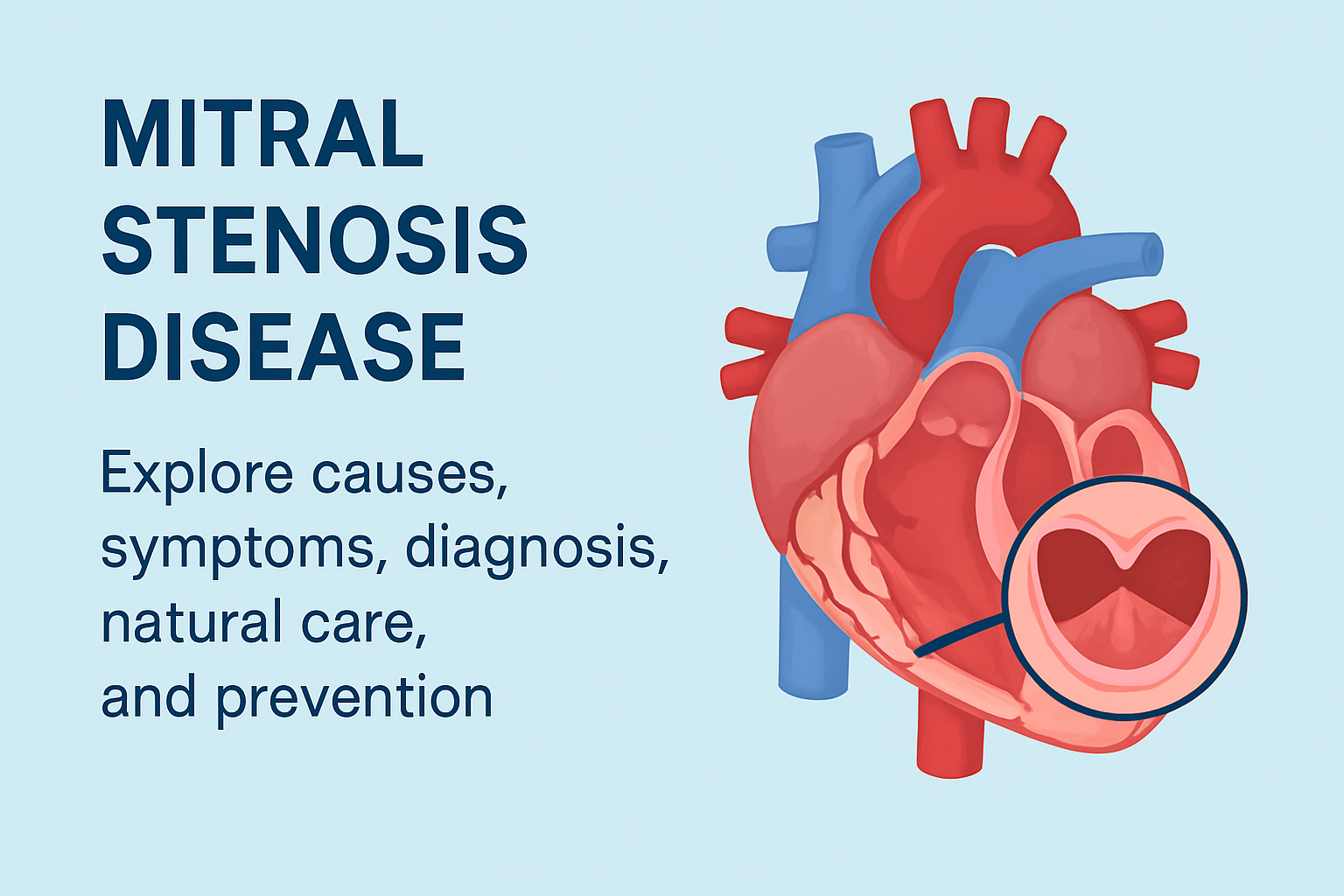
Mitral stenosis is a heart valve disease that affects many people worldwide. The condition develops when the mitral valve becomes narrow. The valve lies between the left atrium and the left ventricle. It controls the flow of blood in one direction. When the valve narrows, the blood cannot move smoothly.
As a result, pressure rises inside the heart and the lungs. Many patients experience breathing problems, heart fatigue and a reduced quality of life.
This article explains mitral stenosis in a simple and clear way. You will learn its causes, signs, diagnosis, natural care and prevention. The information is suitable for readers who want quick clarity. It is also helpful for students, caregivers and health professionals.
Although the disease sounds complex, the basic idea is easy to understand. The heart needs free movement of blood. A narrow mitral valve blocks this flow. Therefore a person may feel weak or breathless even with small activity. Early awareness is very important.
Timely evaluation and lifestyle care can protect the heart for many years.
Overview of Mitral Stenosis
Mitral stenosis is a structural valve disorder. The most common cause is rheumatic fever. The disease damages the valve tissue. It becomes thick and stiff. However, some patients develop the condition due to calcium deposits or congenital defects.
The valve may not open fully. Blood collects in the left atrium. Pressure rises backward toward the lungs. The lungs fill with fluid and cause shortness of breath.
The disease progresses slowly in many cases. People can live years without symptoms. Yet the condition continues to worsen silently. Therefore regular heart checkups are essential. Early detection allows timely management. It also helps prevent complications such as heart failure and stroke.
Causes of Mitral Stenosis
Several factors lead to mitral stenosis. Rheumatic fever remains the most common cause in many parts of the world. The fever follows untreated throat infections. Immune reactions attack the heart valves and leave scars. Over time the valve becomes narrow.
Some patients develop stenosis due to age related changes. Calcium may build up on the valve leaflets and reduce movement. Moreover, rare congenital defects may exist from birth. They cause early narrowing of the valve. Previous infections of the heart lining may also contribute.
Although the causes vary, they all result in a tight valve opening. The heart needs to work harder to push blood through. Therefore fatigue and breathing difficulty appear in daily life.
Symptoms of Mitral Stenosis
Symptoms depend on the severity of the narrowing. Mild stenosis may cause no visible signs. However, moderate or severe disease affects everyday activities. Many patients feel shortness of breath during exercise. Climbing stairs becomes difficult. Simple work may lead to chest tightness.
Persistent cough and wheezing may appear due to fluid in the lungs. Patients may also feel palpitations. The heart beats fast or irregular. Weakness and tiredness are common. Some people notice swelling in the feet or ankles. Because blood flow slows down, the lungs and tissues retain fluid.
Symptoms often worsen during pregnancy or infections. The heart needs more effort during these times. Therefore early medical guidance is important. Timely care can prevent serious complications.
Diagnosis of Mitral Stenosis
Diagnosis begins with a detailed medical history. Doctors listen to symptoms and examine the patient. A stethoscope may detect a specific heart murmur. The sound comes from the narrow valve. Further tests confirm the condition.
Echocardiography is the most important test. It shows the structure of the mitral valve. It measures the valve opening and blood flow. Other tests include chest X-ray, ECG and stress testing. These tests show heart function and lung changes.
Accurate diagnosis helps doctors decide the best plan. Some patients need only lifestyle care and monitoring. Others may require advanced procedures. However, early diagnosis always improves long term health.
Treatment Without Medicine
Some patients ask about natural or non-medicine care. Lifestyle changes cannot cure a narrow valve. However, they support heart function and reduce symptoms. Doctors recommend these actions as part of overall care.
Balanced diet is important. A heart friendly diet reduces salt and unhealthy fats. It helps prevent fluid buildup. Regular mild exercise improves stamina. Walking and slow cycling are safe choices for many patients. However, intense activity is not advisable without medical guidance.
Weight management is helpful. Extra weight increases heart workload. Deep breathing exercises may reduce breathlessness. However, they do not change the structure of the valve. Smoking and alcohol should be avoided. Both increase heart stress and worsen symptoms.
Monitoring is essential. Therefore, regular medical follow-up is necessary. The valve condition may change over time. Doctors adjust care based on symptoms and test results.
Medical or Surgical Treatment
In some cases, the narrowing becomes severe. Medical procedures open or replace the valve. Balloon valvotomy stretches the valve leaflets. It improves blood flow with minimal surgery. Valve replacement removes the damaged valve.
A new mechanical or biological valve takes its place. These procedures offer relief from long-standing symptoms.
Although surgery sounds frightening, many patients recover well. They enjoy better breathing and energy. However, lifelong follow-up is required. The heart needs regular checks after any valve procedure.
Prevention and Healthy Habits
Prevention begins with proper treatment of throat infections. Untreated infections may lead to rheumatic fever. Therefore, early antibiotic therapy protects the heart. Childhood awareness programs are valuable. They help reduce future valve disease.
Healthy lifestyle habits protect every heart. A balanced diet, low salt intake and regular physical activity support heart function. Avoiding tobacco and alcohol reduces the burden on the cardiovascular system. Stress management through meditation, relaxation and proper sleep also supports health.
People with known valve disease must stay alert. They should avoid infections and visit doctors regularly. Preventive care is easier than treating advanced complications. Simple habits can protect the heart for life.
Global Impact of Mitral Stenosis
Mitral stenosis affects millions worldwide. Developing countries report higher cases due to rheumatic fever. Many children do not receive early treatment for throat infections. As a result, they develop valve disease later in life. The condition creates a serious burden on families and health systems.
However, the impact is not limited to one region. Aging populations in developed countries also show increasing cases due to calcified valves. Global awareness programs are necessary. They encourage timely treatment and prevention.
International public health initiatives aim to reduce rheumatic heart disease. Better access to healthcare makes a difference. Education and screening programs in schools and communities offer long term benefits. When people understand the disease, they seek help early. Therefore, the global outlook can improve.
Living with Mitral Stenosis
Many patients live active lives with this condition. They manage symptoms through lifestyle care and regular checkups. Moderate exercise, proper diet and medical guidance allow normal daily functioning. Patients often learn to monitor their breathing and energy levels.
Support from family plays a key role. Emotional strength helps patients stay positive. Although the disease cannot be reversed without procedures, daily habits make a large difference. People who stay informed and proactive enjoy better health.
Frequently Asked Questions
What is mitral stenosis?
Mitral stenosis is a narrowing of the mitral valve. The valve lies between two heart chambers. Narrowing blocks blood flow and causes pressure buildup.
What causes the disease?
Rheumatic fever is the most common cause. Other causes include calcium deposits, congenital defects and previous heart infection.
What are the main symptoms?
Symptoms include breathlessness, chest discomfort, cough, palpitations and swelling of feet. Fatigue is also very common.
How is it diagnosed?
Echocardiography is the key test. Doctors also use ECG, X-ray and clinical examination.
Can lifestyle changes cure it?
Lifestyle changes cannot widen a narrow valve. However, they improve heart strength and reduce symptoms.
When is surgery needed?
Surgery or balloon procedures are needed in severe cases. They improve blood flow and reduce pressure on the heart.
Conclusion
Mitral stenosis is a serious yet manageable heart condition. Early awareness helps people seek help on time. Lifestyle care supports heart function. Medical procedures offer relief in advanced disease. Although the condition affects daily life, many patients live well with proper guidance.
Knowledge gives strength. If you or someone you know has symptoms of breathlessness or fatigue, consider a heart checkup. Simple steps today can protect your future. Take care of your heart, stay active and seek regular medical advice. Healthy habits and timely action can make a powerful difference.
Aortic Regurgitation Disease: Causes, Symptoms, Treatment
https://newsarmour.com/aortic-regurgitation-disease/
Reference
WHO — Rheumatic Heart Disease Overview
https://www.who.int/health-topics/rheumatic-heart-disease
American Heart Association — Heart Valve Disease
https://www.heart.org/en/health-topics/heart-valve-disease
CDC — Rheumatic Fever and Rheumatic Heart Disease
https://www.cdc.gov/groupastrep/diseases-public/rheumatic-fever.html
Mayo Clinic — Mitral Valve Stenosis
https://www.mayoclinic.org/diseases-conditions/mitral-valve-stenosis
Cleveland Clinic — Valve Disease Diagnosis and Treatment
https://my.clevelandclinic.org/health/diseases/17072-heart-valve-disease