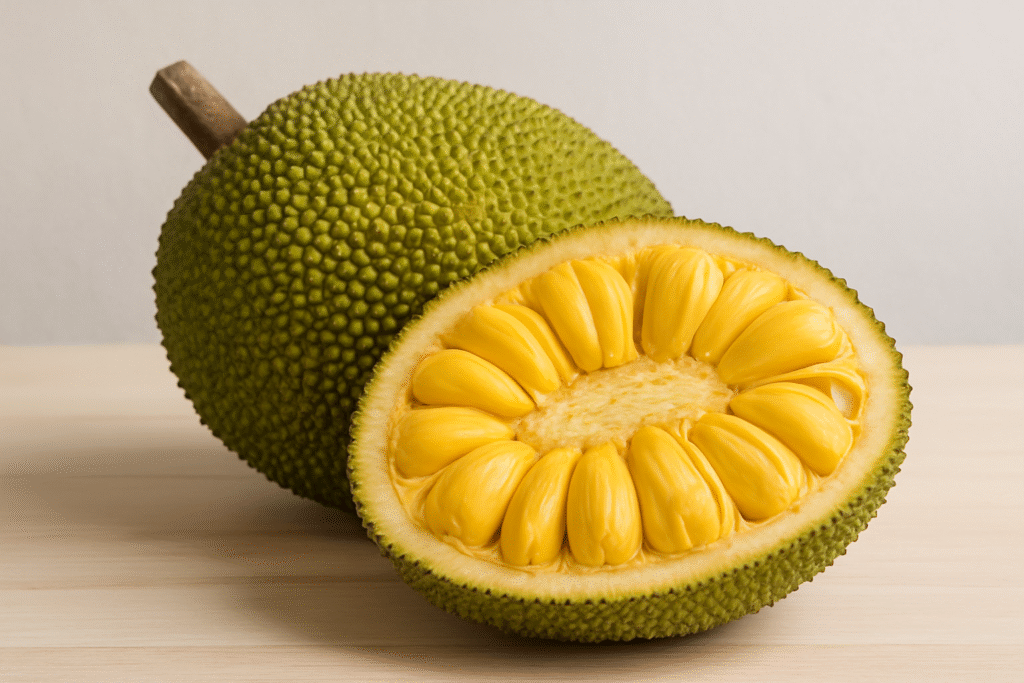
Jackfruit is one of the most unique fruits found in tropical regions. It has a distinct flavor and a versatile texture. Many people use it in both sweet and savory dishes. The fruit is large, bright, and rich in nutrients. It also carries a long history in traditional diets across Asia.
This blog explores its nutrition, benefits, uses, and health value. It also explains how you can enjoy this fruit in simple ways.
What Is Jackfruit?
Jackfruit is a tropical fruit that grows on large evergreen trees. The fruit has a thick outer skin with many small spikes. Inside, it contains soft yellow bulbs. Each bulb has a seed. The fruit ripens during summer in many regions. However, some areas produce it for longer periods because of warm weather.
People enjoy jackfruit at different stages. Raw jackfruit has a mild and firm texture. Ripe jackfruit has a sweet aroma and softer flesh. Both forms are popular in cooking, and each offers different nutrients.
Nutritional Value of Jackfruit
Jackfruit is packed with essential nutrients. It provides vitamins, minerals, fiber, and antioxidants. The fruit also offers a moderate amount of natural sugar. Its yellow color signals the presence of carotenoids, which support good health. Moreover, its fiber content helps digestion and gut balance. The seeds offer protein and essential micronutrients as well.
Jackfruit provides vitamin C, which boosts immunity. It also contains potassium that supports heart health. The presence of magnesium and iron further improves overall health. Therefore, people who eat jackfruit regularly may enjoy better energy levels.
Health Benefits of Jackfruit
Jackfruit offers several benefits for the body. Its nutrients support many functions. The fruit also helps maintain balance in daily meals. Below are the major benefits explained in smooth and clear language.
Supports Digestion
Jackfruit has good fiber content. This fiber adds bulk to the stool and promotes smooth bowel movement. It also reduces constipation. Many people feel lighter after adding fiber-rich foods to their diet. As a result, jackfruit can be a simple addition to support digestive wellness.
Boosts Immunity
Jackfruit is rich in vitamin C. This vitamin fights free radicals and protects the body from infections. It also helps in collagen production. Strong collagen supports skin health and tissue repair. Therefore, eating jackfruit during the season can help maintain immunity.
Improves Heart Health
Potassium in jackfruit helps control blood pressure. It also reduces strain on the arteries. Good potassium levels support heart function as well. Moreover, the antioxidants in jackfruit prevent oxidative stress. This reduces the risk of long-term heart problems.
Helps Blood Sugar Control
Raw jackfruit has a low glycemic index. It releases energy slowly into the body. As a result, it supports better sugar balance. Some studies suggest that raw jackfruit flour may help manage blood glucose. However, ripe jackfruit has more sugar. People with diabetes should eat it in small portions.
Supports Skin and Hair
Jackfruit provides antioxidants that protect the skin from damage. It also offers vitamin C that supports collagen. This improves skin elasticity. Moreover, the nutrients in jackfruit seeds help hair health. The seeds contain protein, iron, and healthy starch.
Culinary Uses of Jackfruit
Jackfruit is widely used in many cuisines. It adapts easily to different cooking styles. The texture of raw jackfruit makes it ideal for savory dishes. However, ripe jackfruit works well in desserts and snacks.
Raw Jackfruit in Cooking
Raw jackfruit is often cooked as a vegetable. Its firm texture absorbs spices very well. Many people prepare curries, stir-fries, and stews using it. It can also be shredded and used as a plant-based meat alternative. This makes it popular in vegan recipes. Moreover, its mild flavor suits a variety of sauces.
Ripe Jackfruit in Sweets
Ripe jackfruit has a sweet and fruity taste. People enjoy it as a snack. It is also used in puddings, jams, and ice creams. Many traditional desserts use ripe jackfruit for its aroma. Its natural sweetness reduces the need for added sugar.
Jackfruit Seeds
The seeds are edible when boiled or roasted. They offer a nutty flavor. People use them in curries and snacks. The seeds provide protein and minerals. Therefore, they add nutritional value to meals.
How to Select and Store Jackfruit
Choosing a good jackfruit requires simple observation. A ripe jackfruit has a mild sweet smell. It also feels slightly soft when pressed. However, raw jackfruit is firm and has a greenish skin.
After cutting, jackfruit should be stored properly. The bulbs can be kept in an airtight container. They stay fresh in the refrigerator for a few days. The seeds should be dried before storing. This prevents spoilage. However, freezing ripe jackfruit helps preserve its taste longer.
Possible Side Effects
Jackfruit is generally safe for most people. However, some individuals may experience allergies. People with latex allergies should be careful. The fruit may cause reactions in rare cases. Moreover, people with diabetes should monitor their portion size when eating ripe jackfruit. Its sugar content may increase glucose levels if eaten in excess.
Sustainable and Eco-Friendly Crop
Jackfruit trees require fewer resources compared to many cash crops. They grow in tough climates. The tree produces large quantities of fruit every season. Therefore, farmers see it as a sustainable option. The fruit also reduces food waste because one jackfruit feeds many people. As a result, it supports both economy and environment.
Jackfruit and Modern Diet Trends
Jackfruit is now popular in global markets. Many people choose it as a plant-based meat option. Its texture makes it suitable for tacos, sandwiches, and wraps. Moreover, health-conscious consumers like its nutrient profile. As a result, jackfruit is becoming a part of modern food trends.
Food companies also use jackfruit in ready-to-eat meals. This makes it accessible to many people. Therefore, its demand is rising every year.
Conclusion
Jackfruit is more than a seasonal fruit. It is nutritious, versatile, and eco-friendly. It supports digestion, immunity, and heart health. Moreover, it offers rich flavor and texture. Adding jackfruit to your diet can be a refreshing change. Explore this fruit in both traditional and modern recipes.
Enjoy its benefits and share it with others. A healthy lifestyle begins with simple choices, and jackfruit can be one of them.
FAQs
What does jackfruit taste like?
Ripe jackfruit tastes sweet and fruity. Raw jackfruit has a mild flavor that absorbs spices easily.
Is jackfruit good for weight loss?
Jackfruit contains fiber that keeps you full. It also reduces cravings. However, portion control is important.
Can people with diabetes eat jackfruit?
Raw jackfruit is better for blood sugar control. Ripe jackfruit should be eaten in small amounts.
Are jackfruit seeds edible?
Yes. Boiled or roasted seeds are nutritious and tasty.
Can jackfruit cause allergies?
People with latex allergy may react to jackfruit. It is rare but possible.
Pear Fruit Benefits: Nutrition, Health & Uses
https://newsarmour.com/pear-fruit-benefits/
Reference
1. Healthline – Jackfruit Nutrition & Benefits
https://www.healthline.com/nutrition/jackfruit-benefits
2. Medical News Today – Jackfruit: Benefits and Nutrition
https://www.medicalnewstoday.com/articles/324787
3. Cleveland Clinic – What Is Jackfruit and Is It Healthy?
https://health.clevelandclinic.org/what-is-jackfruit-and-is-it-healthy
4. WebMD – Jackfruit Health Benefits
https://www.webmd.com/food-recipes/health-benefits-jackfruit
5. Verywell Fit – Jackfruit Nutrition Facts
https://www.verywellfit.com/jackfruit-nutrition-facts-4770410