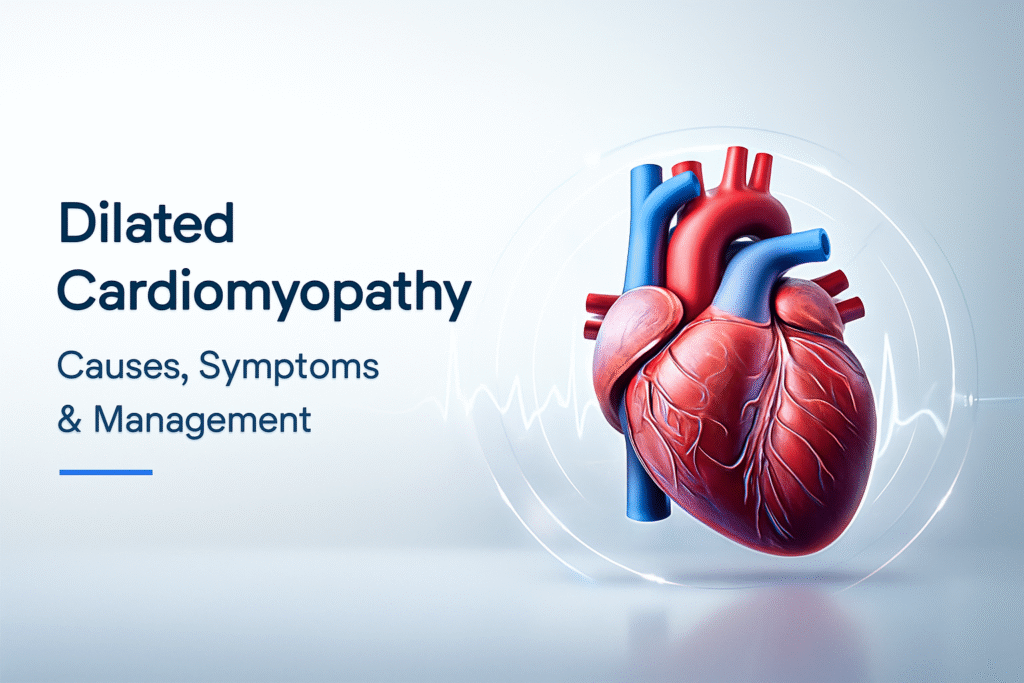
Dilated cardiomyopathy is a heart condition that affects the heart muscle. It causes the heart chambers to stretch and become thin. As a result, the heart cannot pump blood effectively. This condition can appear at any age. However, it is more common in adults. Early awareness helps people manage the condition better and reduce complications.
What Is Dilated Cardiomyopathy?
Dilated cardiomyopathy, often called DCM, is a disorder of the heart muscle. The left ventricle becomes enlarged and weak. Therefore, it loses its ability to contract normally. The condition may progress slowly, yet some people experience rapid changes. Many individuals remain unaware of the early signs because the symptoms start mildly.
The reduced pumping strength affects the body’s blood flow. Fatigue may appear early. Breathlessness may also develop. Moreover, swelling in different parts of the body can arise due to poor circulation. Understanding these signs is essential for early detection.
Causes of Dilated Cardiomyopathy
Several factors can contribute to DCM. Some causes are related to genetics. Others link to lifestyle or underlying health conditions. In some cases, the cause remains unknown. However, researchers continue to study the condition to understand it better.
Genetic Factors
Genetics plays a strong role in many cases. The condition may run in families. A person with a parent or sibling who has DCM carries a higher risk. Therefore, early screening becomes important.
Lifestyle Factors
Certain lifestyle factors may also increase the risk. Excessive alcohol intake is a common risk factor. Poor nutrition can also contribute. Moreover, long-term stress may affect heart health. Healthy habits therefore support better heart function and reduce the risk.
Infections and Immune Responses
Viral infections can sometimes affect the heart muscle. When the body reacts strongly, inflammation may weaken the heart. As a result, the heart chamber expands. Some people recover fully. Others develop long-term complications. Therefore, timely medical evaluation is important after severe infections.
Other Health Conditions
Some long-term health conditions can weaken the heart muscle. These conditions slowly reduce the heart’s ability to pump blood. As the muscle weakens, dilation occurs. Moreover, unmanaged health issues can make the condition worse over time.
Symptoms of Dilated Cardiomyopathy
The symptoms often appear slowly. Many people ignore the early signs. However, early recognition helps prevent complications. Symptoms may vary from person to person.
Fatigue and Weakness
Fatigue appears when the heart pumps less blood. The body receives less oxygen. Simple activities may feel tiring. Moreover, energy levels may drop even without exertion.
Shortness of Breath
Shortness of breath is common in DCM. It may first appear during exercise. Later, it can occur even at rest. The symptom worsens when lying flat. Therefore, people may need extra pillows while sleeping.
Swelling
Swelling in the legs, ankles, or abdomen occurs due to fluid retention. This happens because the heart cannot circulate blood properly. As a result, fluid collects in different parts of the body. The swelling may worsen by the end of the day.
Chest Discomfort
Some people experience chest discomfort. This does not always mean a severe issue, but it requires attention. The discomfort can appear due to strain on the heart.
Irregular Heartbeats
Irregular heartbeats may appear as fluttering or a racing sensation. These episodes may last a few seconds or longer. Moreover, they can make a person feel dizzy or lightheaded.
How Dilated Cardiomyopathy Is Diagnosed
A proper diagnosis requires a detailed evaluation. Healthcare professionals use several methods to study the heart.
Medical History and Examination
The process begins with a review of symptoms. Family history also plays a role. A physical examination helps identify swelling, abnormal sounds, or breathing issues.
Heart Imaging Tests
Imaging tests allow specialists to see the heart’s size and movement. These tests show how well the heart pumps blood. They also reveal if the chambers are enlarged. Moreover, imaging helps track the condition over time.
Electrical Tests
Electrical tests measure the heart’s rhythm. They detect irregular heartbeats. These tests are simple and non-invasive. Therefore, they are commonly used in early evaluation.
Stress Evaluation
Stress assessments check how the heart performs under pressure. The results show changes in blood flow, oxygen levels, and heart rate. These tests help identify declining heart function early.
Treatment and Management of Dilated Cardiomyopathy
Dilated cardiomyopathy requires long-term management. Early care helps improve quality of life. It also slows disease progression.
Lifestyle Changes
Lifestyle changes play a major role in managing DCM. Balanced nutrition supports heart health. Regular physical activity helps maintain strength. However, exercise should be guided by a healthcare professional. Adequate rest is also important because it allows the heart to recover. Moreover, quitting harmful habits improves heart function over time.
Regular Monitoring
Regular check-ups help track the condition. Healthcare professionals monitor heart function and symptoms. As a result, they can make timely decisions. Consistent monitoring improves long-term outcomes.
Managing Underlying Health Issues
Some people develop DCM due to other health problems. Managing these conditions helps reduce strain on the heart. This approach supports overall health and slows the progression of symptoms.
Emotional and Mental Support
Living with a chronic condition can be stressful. Emotional support therefore becomes essential. Counseling, support groups, and open communication with family help improve mental well-being. Moreover, stress management techniques strengthen overall health.
Possible Complications of Dilated Cardiomyopathy
Unmanaged symptoms can lead to complications. Early intervention reduces the risks.
Heart Rhythm Issues
Irregular heartbeats can cause dizziness. In some cases, they can become severe. Monitoring helps detect problems early.
Heart Failure
The heart may struggle to pump blood effectively. Symptoms may worsen over time. However, proper management helps reduce the risk.
Blood Flow Problems
Poor blood circulation may lead to clot formation. This can create serious complications. Therefore, monitoring and early care remain essential.
Living With Dilated Cardiomyopathy
A person with DCM can still lead a meaningful life. Healthy habits support recovery. Regular check-ups guide long-term care. Moreover, emotional strength helps people adapt to changes. Many individuals continue their daily activities with proper guidance.
Building a routine helps maintain stability. A balanced diet, gentle exercises, and rest create a supportive lifestyle. Family support also plays an important role. Compassion and understanding make the journey easier.
Conclusion
Dilated cardiomyopathy is a serious condition, but early awareness makes a big difference. Proper evaluation and regular care help manage symptoms. Healthy habits also strengthen the heart over time. If you or your loved ones notice early signs, seek a professional evaluation. Taking the first step today can protect your heart for years to come.
FAQs
What is the main cause of dilated cardiomyopathy?
The cause varies. Some cases relate to genetics. Others link to lifestyle or long-term health conditions.
Can dilated cardiomyopathy improve?
Many people see improvement with proper care, lifestyle changes, and regular monitoring.
Is dilated cardiomyopathy life-threatening?
It can become serious if untreated. However, early detection improves long-term outcomes.
Can exercise help?
Guided and safe physical activity supports heart health. Always follow professional instructions.
Can DCM occur without symptoms?
Yes. Some people remain symptom-free in early stages. Regular health check-ups therefore help detect it early.
Acute Coronary Syndrome: Symptoms, Causes & Treatment Guide
https://newsarmour.com/acute-coronary-syndrome/
Reference
- American Heart Association – Dilated Cardiomyopathy
https://www.heart.org/en/health-topics/cardiomyopathy/what-is-cardiomyopathy - National Institutes of Health – Cardiomyopathy Overview
https://www.nhlbi.nih.gov/health/cardiomyopathy - Cleveland Clinic – Dilated Cardiomyopathy Information
https://my.clevelandclinic.org/health/diseases/16871-dilated-cardiomyopathy - Mayo Clinic – Dilated Cardiomyopathy Symptoms & Causes
https://www.mayoclinic.org/diseases-conditions/dilated-cardiomyopathy - MedlinePlus – Cardiomyopathy Details
https://medlineplus.gov/cardiomyopathy.html