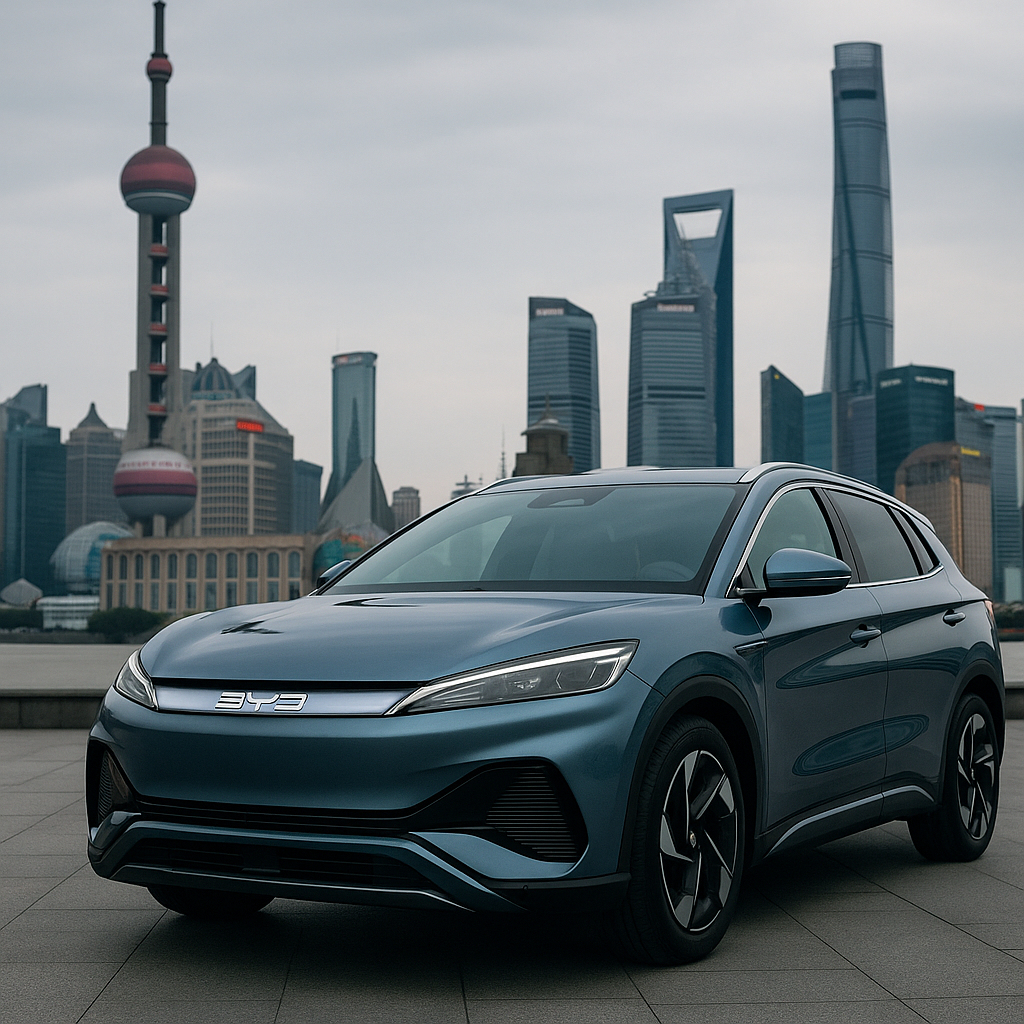
Electric vehicles (EVs) have reshaped the global automobile industry. While many nations are racing toward green mobility, China has already taken the crown. The country’s EV dominance didn’t happen overnight. It is the result of long-term vision, strong policies, and a homegrown hero BYD (Build Your Dreams).
This is the story of how BYD transformed China from a follower to a global leader in the electric revolution.
The Early Struggle: From Batteries to Cars
BYD began its journey in 1995 as a battery manufacturer. Founded by Wang Chuanfu, a chemist turned entrepreneur, the company started small in Shenzhen. Initially, BYD made rechargeable batteries for mobile phones and laptops.
However, Wang’s ambitions went beyond batteries. In 2003, BYD entered the automotive industry by acquiring a small car manufacturer. Many doubted the move, but Wang saw the future — a world powered by electricity, not gasoline.
This strategic shift marked the beginning of China’s EV story. While traditional automakers focused on engines, BYD focused on energy storage and efficiency. The company’s early experience in batteries gave it a major advantage in EV technology.
Government Support: The Turning Point
China’s government played a crucial role in shaping the EV landscape. In the mid-2000s, Beijing began promoting new energy vehicles (NEVs) to reduce pollution and oil dependence.
Generous subsidies, tax benefits, and infrastructure investments followed. The government also restricted fossil-fuel car registrations in big cities, making EVs more appealing.
As a result, BYD found itself in the perfect position. The company’s battery expertise aligned with the nation’s clean energy goals. While foreign automakers struggled to adapt, BYD expanded rapidly.
In 2008, the company launched the BYD F3DM, one of the world’s first plug-in hybrid cars. It wasn’t perfect, but it signaled China’s serious intent to dominate the EV market.
Innovation and Expansion: The Rise of BYD
Innovation lies at the heart of BYD’s growth. The company focused on vertical integration, producing everything in-house — from batteries to electric motors and semiconductors. This reduced costs and improved quality control.
BYD also developed its Blade Battery, a game-changer in the industry. It offered better safety, higher energy density, and longer lifespan. As a result, global automakers started showing interest in BYD’s technology.
Moreover, BYD didn’t limit itself to passenger cars. The company expanded into electric buses, trucks, and monorails. Cities around the world began adopting BYD electric buses for public transport, boosting its global presence.
By 2020, BYD was not just an automaker — it was an energy ecosystem company, producing solar panels, energy storage systems, and EVs for every segment.
The Tesla Challenge and the Global Shift
For years, Tesla dominated EV headlines. However, BYD quietly built a massive foundation at home. By 2022, BYD overtook Tesla in global EV sales, marking a new era.
Unlike Tesla, BYD offered a wide range of models — from affordable compact cars to luxury sedans. This variety allowed it to capture every market tier.
Furthermore, BYD’s affordability and reliability made EVs accessible to millions of Chinese consumers. The company’s local supply chain and government support ensured stable growth, even during global chip shortages.
As global interest in sustainable mobility rose, BYD’s exports surged. The brand entered Europe, Southeast Asia, and Latin America, competing directly with global giants.
In Norway, BYD became a key EV brand. In Thailand and Brazil, it started building manufacturing plants, signaling its global ambitions.
Why BYD Succeeded Where Others Failed
Several factors explain BYD’s success. First, its battery-first approach gave it a technological edge. While other carmakers depended on suppliers, BYD controlled its battery supply.
Second, its close partnership with the Chinese government helped secure resources, policies, and infrastructure support.
Third, BYD focused on long-term innovation, not just short-term profits. It invested heavily in research and development, producing some of the most efficient EV technologies in the world.
Finally, BYD’s brand philosophy — Build Your Dreams — resonated deeply with the younger generation. It represented progress, sustainability, and confidence in China’s innovation.
BYD’s Role in China’s Global Strategy
China’s rise as an EV superpower is not just an industrial success — it’s also a geopolitical strategy. The nation wants to lead the green technology race and reduce dependence on oil imports.
BYD plays a central role in this vision. The company helps position China as a leader in clean energy, manufacturing, and export power.
With more nations adopting electric mobility policies, BYD’s global reach keeps expanding. Its presence in over 70 countries shows that China is no longer following trends — it is setting them.
Moreover, BYD’s innovation inspires dozens of smaller Chinese EV startups, fueling an entire ecosystem of green technology.
The Future: Beyond Cars
BYD’s vision goes beyond making cars. The company aims to create a zero-emission energy ecosystem where solar power, battery storage, and electric transportation work together.
It is also exploring autonomous driving, smart grids, and solid-state batteries, which could redefine mobility once again.
As the world races toward carbon neutrality, BYD stands as a symbol of what’s possible when vision meets determination.
Conclusion: The Dream That Changed an Industry
From a small battery maker to the world’s largest EV manufacturer, BYD’s story is nothing short of inspiring. It shows how innovation, persistence, and national vision can transform an entire industry.
China’s dominance in the EV market didn’t come by chance. It came through relentless pursuit of progress, guided by a dream to build a better, cleaner future.
As we move into an era of electric mobility, one thing is clear — the future is electric, and BYD is driving it forward.
If you’re inspired by BYD’s journey, now is the time to rethink what dreams can achieve. The road ahead belongs to those who dare to build their own dreams.
The Last V12s — Are We Witnessing the End of Pure Power?
https://newsarmour.com/the-last-v12s-end-of-pure-power/
Sources ;-
BYD official website — global corporate information: https://en.byd.com/ en.byd.com
BYD “About Us” page: https://www.byd.com/us/about-byd BYD
Britannica profile of BYD (“BYD Co. Ltd.”) — history, business & EV focus: https://www.britannica.com/money/BYD-Co-Ltd Encyclopedia Britannica
Article on BYD’s global strategy and Chinese EV investment: https://restofworld.org/2025/china-ev-investment-global-expansion/ Rest of World
Hindustan Times article on BYD’s 2024 vehicle sales: https://auto.hindustantimes.com/auto/electric-vehicles/byd-sells-over-4-2-million-vehicles-in-2024-dominating-china-s-ev-market-41735961465398.html