Overview
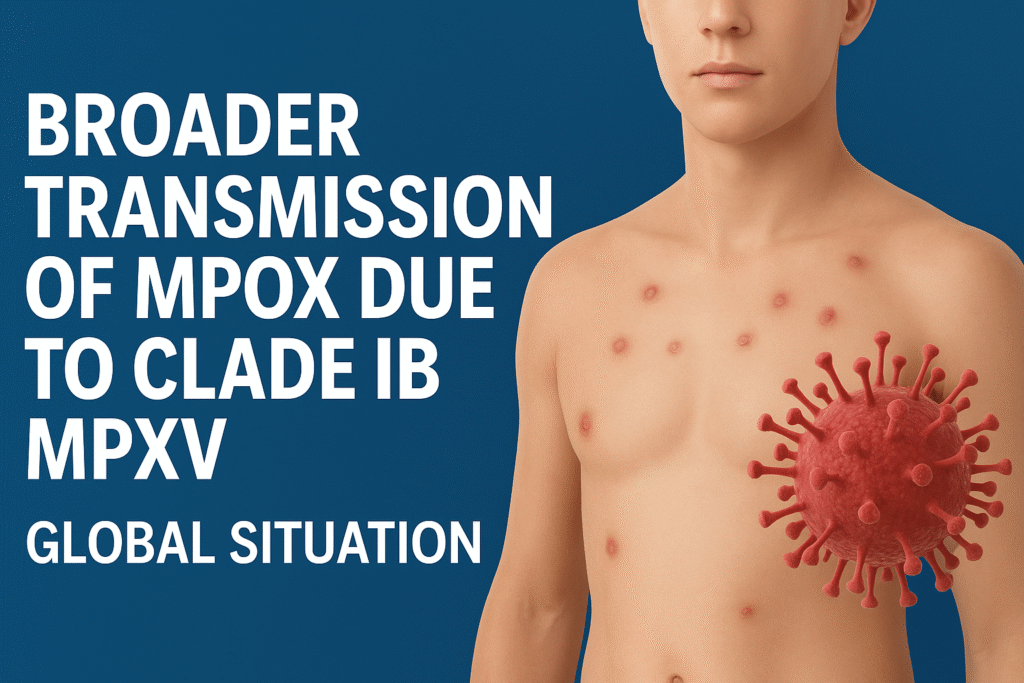
Mpox, once considered a rare zoonotic disease, has now become a global health concern. The recent spread of clade Ib monkeypox virus (MPXV) has raised alarms worldwide. According to the World Health Organization, local transmission is now reported in countries previously unaffected . This shift highlights the urgent need for awareness, prevention, and coordinated response.
The second declaration of a public health emergency of international concern was lifted in September 2025. However, outbreaks continue across multiple regions, showing that mpox remains a persistent threat WHO. Therefore, understanding the disease and its evolving transmission patterns is essential.
Causes of Mpox
Mpox is caused by the monkeypox virus (MPXV), a member of the orthopoxvirus family. Traditionally, transmission occurred through contact with infected animals. However, human-to-human transmission has become more common. Close physical contact, respiratory droplets, and contaminated materials can spread the virus. Clade Ib has shown stronger transmission among specific communities, particularly men who have sex with men. This change in epidemiology has made global monitoring more complex.
Symptoms of Mpox
The symptoms of mpox often resemble those of smallpox but are milder. Patients usually develop fever, headache, muscle aches, and swollen lymph nodes. Within days, a rash appears, spreading across the body. The rash progresses from macules to pustules before scabbing over. Fatigue and discomfort are common during the illness. Symptoms typically last two to four weeks. Severe cases, though rare, can lead to complications and even death.
Diagnosis
Diagnosis relies on clinical evaluation and laboratory testing. Healthcare providers examine the rash and assess exposure history. Polymerase chain reaction (PCR) tests confirm the presence of MPXV. Early diagnosis is crucial to prevent further spread. Therefore, awareness among clinicians and communities is vital. Misdiagnosis can delay treatment and increase transmission risks.
Treatment Without Medicine
There is no specific cure for mpox. Supportive care remains the main approach. Patients are advised to rest, stay hydrated, and maintain good nutrition. Pain relievers and fever reducers help manage symptoms. Isolation is critical to prevent transmission. Healthcare workers provide monitoring to detect complications early. Psychological support also plays a role, as stigma and fear often accompany the disease. Therefore, community-based care and empathy are essential.
Prevention
Prevention strategies focus on reducing exposure and breaking transmission chains. Public health authorities recommend avoiding close contact with infected individuals. Safe sexual practices are strongly advised, especially in high-risk groups. Regular handwashing and use of protective equipment reduce risks. Vaccination with smallpox-derived vaccines offers protection. Moreover, awareness campaigns help communities understand symptoms and seek care early. As a result, prevention remains the strongest tool against mpox.
Global Impact
The global impact of mpox is significant. In October 2025 alone, over 2,500 new cases were reported across 44 countries The Hans India. The outbreaks strain healthcare systems and challenge public health infrastructure. Economic costs also rise due to disruptions in work and travel. Social stigma further complicates response efforts. Moreover, the spread across continents shows that mpox is no longer confined to Africa. International cooperation is therefore essential. Countries must share data, resources, and strategies to contain the disease.
Broader Transmission of Clade Ib
Clade Ib has changed the dynamics of mpox transmission. Unlike earlier outbreaks linked to travel, local transmission now occurs in diverse regions WHO Agenparl, Agenzia di Stampa Parlamentare. This broader spread increases the risk of sustained community outbreaks. The virus adapts to new environments, making containment harder. Public health experts warn that complacency could worsen the situation. Therefore, vigilance and preparedness are critical. The global community must treat mpox as a continuing challenge, not a past emergency.
Public Health Response
Authorities worldwide are strengthening surveillance and response systems. WHO advises countries to maintain emergency preparedness WHO. Rapid testing, contact tracing, and isolation remain key strategies. Community engagement is also vital. People must trust health systems and participate in prevention efforts. Moreover, governments are urged to invest in vaccines and healthcare infrastructure. As a result, coordinated action can reduce the burden of mpox.
FAQs
What is mpox?
Mpox is a viral disease caused by the monkeypox virus, related to smallpox.
How does mpox spread?
It spreads through close contact, respiratory droplets, and contaminated materials.
What are the main symptoms?
Fever, rash, swollen lymph nodes, and fatigue are common symptoms.
Is there a cure for mpox?
No specific cure exists. Supportive care helps manage symptoms.
Can mpox be prevented?
Yes. Vaccination, safe practices, and hygiene reduce risks.
Why is clade Ib important?
Clade Ib shows broader transmission, making outbreaks harder to control.
Is mpox still a global emergency?
The formal emergency status was lifted, but outbreaks continue worldwide.
Conclusion
Mpox remains a pressing global health issue. The broader transmission of clade Ib MPXV highlights the need for vigilance. Communities must stay informed, practice prevention, and support those affected. Governments and health organizations must continue investing in surveillance, vaccines, and education. Together, we can reduce the impact of mpox and protect vulnerable populations. Awareness and action today will shape a safer tomorrow. Let us commit to building resilience against emerging diseases and fostering a healthier world.
Sources: WHO Agenparl, Agenzia di Stampa Parlamentare The Hans India
Endocarditis Disease: Causes, Symptoms, Diagnosis & Care
Endocarditis Disease: Causes, Symptoms, Diagnosis & Care