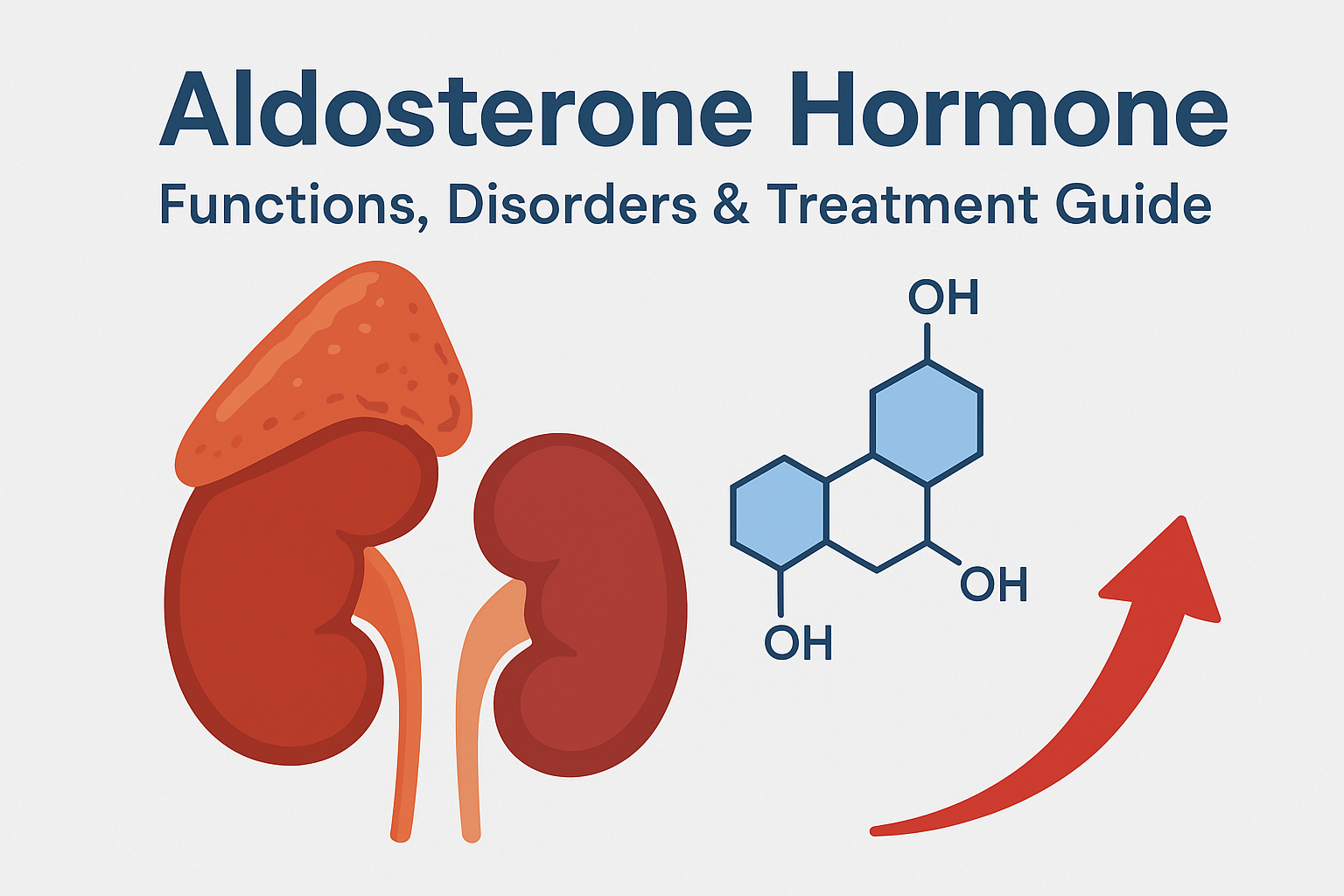
Aldosterone is a vital hormone that helps your body maintain balance. It plays a central role in fluid regulation, blood pressure control, and electrolyte stability. Many people do not understand how powerful this hormone is. However, its functions affect your daily health in several important ways.
This blog explains everything about aldosterone in clear and simple terms. You will learn how it works, why it matters, and what happens when its levels change.
What Is Aldosterone?
Aldosterone is a steroid hormone produced by the adrenal glands. These glands sit on top of your kidneys. Aldosterone belongs to a group of hormones called mineralocorticoids. Its primary job is to regulate sodium and potassium balance in your body.
It also helps maintain blood volume and blood pressure. As a result, it acts as a key regulator of your internal environment.
The hormone works under a system known as the renin-angiotensin-aldosterone system. This system activates when your blood pressure drops. It also activates when your sodium levels fall or potassium levels rise. Therefore, aldosterone production changes based on your internal needs.
How Aldosterone Works in the Body
Aldosterone acts mainly on your kidneys. It signals them to retain sodium and water. It also signals them to remove extra potassium. These actions help stabilize your blood pressure. Moreover, they support proper fluid levels throughout your body.
When your kidneys retain more sodium, water automatically follows. This increases blood volume. Consequently, your blood pressure rises. The body uses this mechanism to protect itself from dehydration or low pressure. Aldosterone also works with other hormones to maintain overall balance.
Why Aldosterone Is Important
Your body relies on aldosterone for several essential functions. It helps you stay hydrated. It maintains stable blood pressure. It prevents dangerous shifts in electrolytes. Even small changes in this hormone can create major health issues. Therefore, healthy aldosterone levels are extremely important.
Your muscles and nerves also depend on proper potassium levels. Since aldosterone controls potassium removal, its role becomes even more critical. Imbalances may lead to fatigue, weakness, or severe complications. This makes the hormone a cornerstone of metabolic stability.
Causes of High Aldosterone Levels
High aldosterone levels may occur due to certain medical conditions. The most common cause is primary hyperaldosteronism. This happens when your adrenal glands produce too much aldosterone. It may result from a benign tumor or gland overactivity. As a result, your blood pressure may rise sharply.
Secondary hyperaldosteronism may occur due to other body conditions. Kidney disease can trigger this reaction. Heart failure may also stimulate excess aldosterone. Moreover, liver problems may push your body into producing more of it. These issues force the hormone system to overreact.
Symptoms of Excess Aldosterone
Excess aldosterone affects your body in several ways. High blood pressure is the most common sign. This pressure often does not respond to regular medications. You may also experience frequent urination. Low potassium levels can cause muscle cramps and weakness. Fatigue becomes more noticeable as the imbalance continues.
Some people may feel headaches or tingling sensations. These symptoms may develop slowly. Therefore, many patients ignore them until complications rise. Early evaluation helps prevent long-term problems.
Causes of Low Aldosterone Levels
Low aldosterone levels are less common. However, they also create serious challenges. Addison’s disease is one major cause. It occurs when the adrenal glands fail to produce enough hormones. Low aldosterone may also result from genetic conditions. Certain medications may affect hormone production too.
When aldosterone is low, sodium levels drop. As a result, patients may feel dizzy or light-headed. Blood pressure may fall suddenly. Dehydration becomes more likely. Therefore, treatment is essential for restoring balance.
Symptoms of Low Aldosterone
Low aldosterone causes salt loss. This leads to dehydration. Patients often feel chronic fatigue. They may feel weak or confused. Some may experience nausea. The drop in blood pressure may cause fainting.
These symptoms may appear gradually. Therefore, many people misinterpret them as routine tiredness. However, persistent signs require medical attention.
Diagnosis of Aldosterone Disorders
Doctors use several tests to diagnose aldosterone issues. A blood test measures aldosterone and renin levels. Their ratio helps identify the disorder. Urine tests may provide additional details. Imaging tests evaluate adrenal gland conditions. Moreover, the doctor may use stimulation or suppression tests to confirm results.
Proper diagnosis helps guide treatment. It also helps prevent complications. Early testing improves health outcomes significantly.
Treatment Options for Aldosterone Imbalances
Treatment depends on the cause. High aldosterone often requires medications. These medicines block the hormone’s effects. They also help lower blood pressure. Some patients may need surgery if a tumor is causing overproduction. Surgery may restore normal hormone levels.
Low aldosterone requires replacement therapy. Patients receive hormones to restore balance. They also need to increase salt intake. Doctors monitor progress regularly. This ensures safe and effective recovery.
Lifestyle changes support treatment. A balanced diet helps maintain stable electrolytes. Regular monitoring keeps symptoms under control. Moreover, staying hydrated reduces complications.
Aldosterone and Long-Term Health
Aldosterone affects heart health. High levels may damage blood vessels. They may lead to heart enlargement. Therefore, early management is essential. Healthy hormone levels protect your organs. They also support stable metabolism.
Proper treatment lowers long-term risks. It also improves your energy levels. As a result, your overall quality of life improves.
Conclusion
Aldosterone plays a powerful role in your health. It balances fluids, electrolytes, and blood pressure. Even small changes in its levels can affect your daily life. Therefore, understanding this hormone becomes essential. Early diagnosis and proper treatment bring excellent results. If you notice symptoms, take timely action.
Your body stays stronger when its internal systems remain balanced. Take care of your health and stay informed about your hormones. Knowledge always supports better well-being.
FAQs
What is the main function of aldosterone?
Aldosterone regulates sodium, potassium, and fluid balance. It also helps control blood pressure.
What causes high aldosterone levels?
Most cases occur due to adrenal overactivity or benign adrenal tumors. Other medical conditions may also contribute.
What happens if aldosterone is too low?
Low aldosterone may cause dehydration, low blood pressure, fatigue, and salt loss.
Can aldosterone imbalance be treated?
Yes. Treatment includes medications, hormone therapy, or surgery, depending on the cause.
Is aldosterone testing necessary?
Testing is important when symptoms suggest imbalance. It helps diagnose the underlying condition accurately.
Relaxing Hormone: How It Brings Calm and Reduces Stress
https://newsarmour.com/relaxing-hormone/
Reference
- Mayo Clinic – Aldosterone Test
https://www.mayoclinic.org/tests-procedures/aldosterone-test - Cleveland Clinic – Hyperaldosteronism Overview
https://my.clevelandclinic.org/health/diseases/15252-hyperaldosteronism - MedlinePlus – Aldosterone
https://medlineplus.gov/lab-tests/aldosterone - Endocrine Society – Hormone Health: Aldosterone
https://www.hormone.org/your-health-and-hormones/hormones/aldosterone - NIH – Renin-Angiotensin-Aldosterone System
https://www.ncbi.nlm.nih.gov/books/NBK470410/