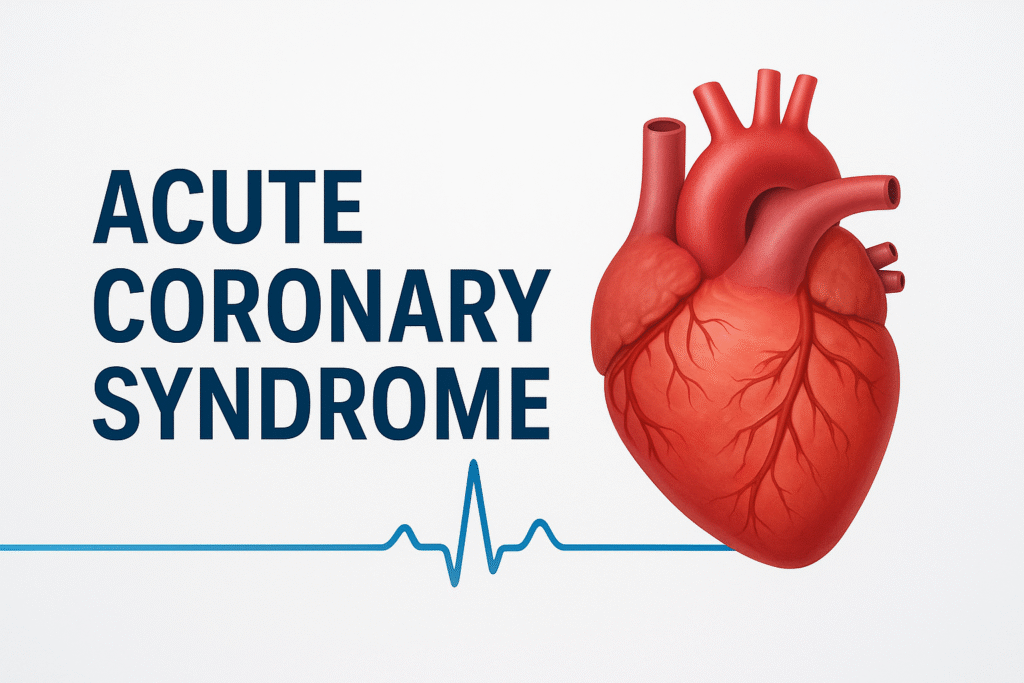
Acute Coronary Syndrome is a serious heart condition. It develops when the heart does not receive enough blood. This drop in blood flow happens suddenly. It often occurs due to a blocked coronary artery.
The condition demands immediate medical care. Quick action can save the heart muscle. Therefore, early awareness is essential for everyone.
Understanding Acute Coronary Syndrome
Acute Coronary Syndrome, or ACS, includes several emergency heart conditions. These conditions occur when blood flow to the heart becomes limited or stops. The most common forms include unstable angina, NSTEMI, and STEMI.
All three conditions may lead to major heart complications. Therefore, doctors treat ACS as a medical emergency.
The blockage usually starts with plaque rupture inside a coronary artery. Plaque contains fat, cholesterol, and calcium. A rupture triggers a blood clot. As a result, the artery becomes narrow or completely closed. This process reduces oxygen supply. The heart muscle then begins to suffer damage.
Common Causes of Acute Coronary Syndrome
The primary cause of ACS is plaque buildup in the arteries. This condition is known as atherosclerosis. Plaque forms slowly over many years. However, a sudden rupture causes an instant emergency.
Several risk factors increase the chances of plaque formation. Smoking damages arteries and speeds up plaque growth. High cholesterol raises the amount of fat in the bloodstream.
High blood pressure strains the artery walls. Diabetes affects blood circulation. Moreover, a sedentary lifestyle weakens the heart. Poor diet further worsens the problem.
Family history also plays a major role. People with a parent or sibling who had heart disease face higher risks. Age increases risk as well. Arteries stiffen with time, which makes blockages more likely.
Warning Signs You Should Never Ignore
Acute Coronary Syndrome produces several early symptoms. Chest pain is the most common warning sign. It may feel like tightness, heaviness, or pressure. The discomfort can spread to the arm, jaw, neck, or back. Some people also notice shortness of breath. Sweating increases as the heart struggles for oxygen. Nausea or dizziness can also appear.
However, symptoms vary between individuals. Women may experience unusual fatigue. They may feel discomfort in the upper abdomen. Some may not feel strong chest pain at all. These unusual patterns often delay treatment. As a result, complications become more serious.
It is important to respond quickly. Seek medical help if symptoms last more than a few minutes. A short delay can cause long-term damage.
Types of Acute Coronary Syndrome
Unstable Angina
Unstable angina occurs when the heart receives less blood than it needs. The pain appears even at rest. The pattern changes suddenly. It may become more intense or last longer. The condition does not usually cause permanent damage. However, it shows that the risk of a heart attack is high. Therefore, doctors treat unstable angina as a major warning sign.
NSTEMI
NSTEMI is a type of heart attack. Blood flow drops enough to damage part of the heart muscle. It does not cause the same ECG changes seen in STEMI. However, blood tests show elevated cardiac enzymes. These enzymes rise when heart cells begin to die. NSTEMI still requires quick medical care.
STEMI
STEMI is the most dangerous form of ACS. A major coronary artery becomes completely blocked. As a result, a large part of the heart loses blood supply. Damage happens very fast. This condition needs immediate treatment. Doctors must restore blood flow quickly to prevent severe complications.
How Doctors Diagnose Acute Coronary Syndrome
Doctors diagnose ACS using several tests. The first step is a discussion about symptoms and medical history. Doctors then examine the patient physically. They check pulse rate, breathing, and blood pressure.
An electrocardiogram is a key tool. It shows changes in heart rhythm. It also reveals which parts of the heart lack oxygen. Moreover, blood tests help detect cardiac enzymes. These enzymes increase when heart cells suffer damage.
Doctors may also use imaging tests. An echocardiogram shows how the heart pumps. It identifies weak areas caused by low oxygen. Coronary angiography is another common test. It reveals the exact location and size of blockages.
Treatment Options for Acute Coronary Syndrome
Treatment depends on the severity of ACS. Doctors aim to restore blood flow quickly. They use medicines and procedures to achieve this goal.
Procedures are necessary in severe cases. Angioplasty is a common treatment. Doctors insert a balloon into the blocked artery. They inflate it to open the passage. A stent may be placed to keep the artery open. In complex cases, bypass surgery becomes necessary. This procedure creates a new route for blood flow around the blockage.
Possible Complications of Acute Coronary Syndrome
ACS can lead to serious complications. Heart failure may occur if the heart muscle becomes weak. Abnormal heart rhythms can also develop. Some rhythms are dangerous and require urgent care. Low blood pressure may appear in severe cases. Moreover, a large heart attack can cause permanent damage. These risks highlight the importance of quick treatment.
Lifestyle Changes for Heart Recovery
Heart-healthy habits support long-term recovery. Quitting smoking protects arteries. A balanced diet improves cholesterol and blood pressure. Include fresh fruits, vegetables, and whole grains. Reduce salt and sugar intake. Regular exercise strengthens the heart. Begin with light activity and increase it slowly.
Stress control is also important. High stress levels raise blood pressure. Relaxation techniques help maintain calmness. Adequate sleep supports heart health. Follow-up visits allow doctors to track recovery. Consistent monitoring prevents future problems.
Prevention Is Always Better
Preventing ACS is easier than treating it. Therefore, simple lifestyle changes can make a major difference. Regular health checkups detect issues early. Many heart problems stay silent for years. Early detection prevents severe complications.
Maintaining a healthy weight reduces strain on the heart. Limiting alcohol keeps blood pressure in check. People with diabetes or hypertension should follow medical advice carefully. Proper control reduces long-term risk. Awareness about heart symptoms also helps. Quick response during an emergency saves lives.
Conclusion
Acute Coronary Syndrome is a serious condition, but early action can change the outcome. Every heartbeat matters, and your daily choices shape your heart’s future. Start with small steps. Choose healthier food, move more, and manage stress. If you ever feel unusual chest discomfort, seek help without delay. Your heart deserves care, and so do you. Begin your journey toward better heart health today, and inspire others to do the same.
FAQs on Acute Coronary Syndrome
1. What is Acute Coronary Syndrome?
Acute Coronary Syndrome is a group of conditions caused by reduced blood flow to the heart. It includes unstable angina, NSTEMI, and STEMI. All forms require quick medical attention.
2. What causes Acute Coronary Syndrome?
ACS occurs when plaque inside a coronary artery ruptures. A clot forms and blocks blood flow. As a result, the heart does not receive enough oxygen.
3. What are the early symptoms of ACS?
Chest pain is the most common sign. The pain may spread to the arm, jaw, or back. Shortness of breath, sweating, and nausea may also appear.
4. Can women have different symptoms?
Yes. Women may feel unusual fatigue or dizziness. They may also feel discomfort in the upper abdomen. These symptoms can delay treatment.
5. How is ACS diagnosed?
Doctors use an ECG to check heart rhythm. Blood tests detect cardiac enzymes. Imaging tests help identify blockages.
6. Is ACS the same as a heart attack?
ACS includes heart attacks, but not all ACS cases are full heart attacks. NSTEMI and STEMI are heart attacks. Unstable angina is a warning sign.
7. How is ACS treated?
Doctors use medicines to restore blood flow. They may also perform angioplasty or bypass surgery. Treatment depends on the severity of the blockage.
8. Can Acute Coronary Syndrome be prevented?
Healthy lifestyle habits reduce the risk. Quit smoking, eat balanced meals, and exercise regularly. Regular checkups also help detect problems early.
9. Who is at higher risk of ACS?
People with high blood pressure, high cholesterol, or diabetes face higher risks. Smokers and those with a family history of heart disease are also at risk.
10. What should I do if I feel chest pain?
Do not ignore it. Seek medical help immediately. Quick treatment can save your life.
11. Can ACS come back after treatment?
Yes. The risk remains if risk factors stay uncontrolled. Lifestyle changes and medicines help prevent future episodes.
12. How long is recovery after ACS?
Recovery time varies. Many people improve within weeks. However, long-term habits determine overall heart health.
Carotid Artery Disease: Understanding Causes, Symptoms, and Prevention
https://newsarmour.com/carotid-artery-disease-causes-symptoms-prevention/
Reference
- American Heart Association – Acute Coronary Syndrome
https://www.heart.org/ - Mayo Clinic – Acute Coronary Syndrome Overview
https://www.mayoclinic.org/ - Centers for Disease Control and Prevention – Heart Disease Information
https://www.cdc.gov/ - Cleveland Clinic – ACS Symptoms & Treatment
https://my.clevelandclinic.org/ - World Health Organization – Cardiovascular Diseases
https://www.who.int/