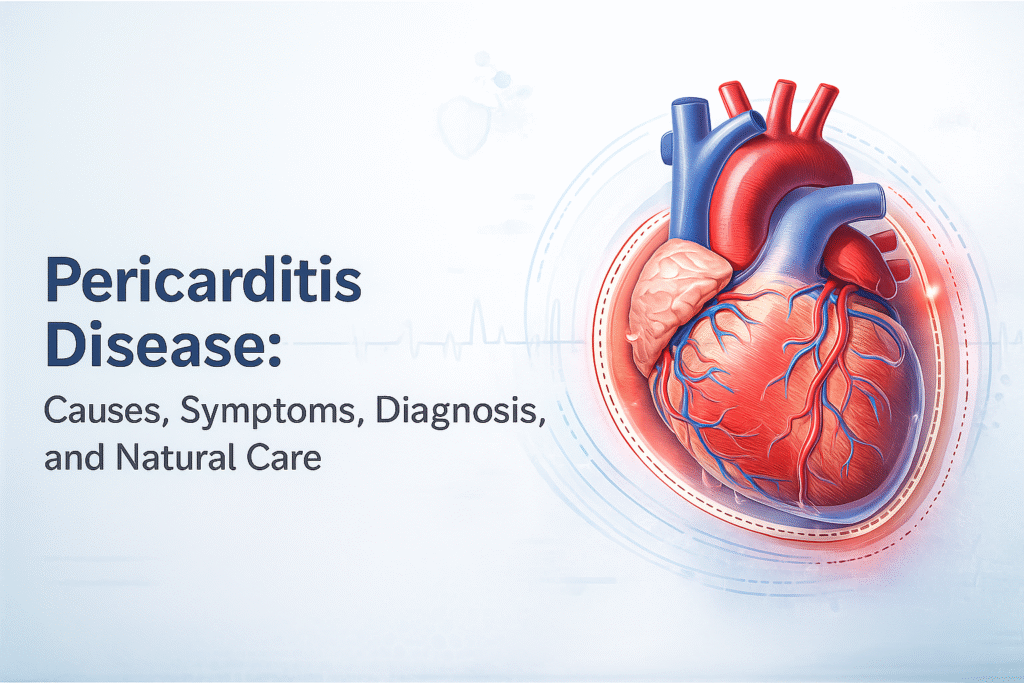
Pericarditis is an inflammatory condition that affects the thin sac around the heart. This sac is called the pericardium. It protects the heart and allows it to beat without friction. When the pericardium becomes inflamed, pain and discomfort develop. The condition may be mild, but it can also become serious if not treated properly.
This blog explains the causes, symptoms, diagnosis, natural care methods, prevention, and global impact of pericarditis. It also provides helpful FAQs for readers.
Overview of Pericarditis
Pericarditis occurs when the pericardial layers swell or become irritated. This reaction makes the heart work harder than usual. The condition may appear suddenly, or it may develop slowly. Doctors classify it based on its pattern. Acute pericarditis develops quickly and usually lasts a few weeks.
Chronic pericarditis lasts longer and may continue for months. Many patients recover well with proper care. However, complications may appear in some cases. Therefore, early attention is important.
Pericarditis may affect people of any age. However, young adults and middle-aged people experience it more often. The condition may also appear after infections, injuries, or surgery. Although it is uncommon, it still requires awareness and correct guidance.
Moreover, the condition shows wide variation across regions. Many cases remain underdiagnosed because symptoms may resemble other heart or chest problems. As a result, timely evaluation becomes essential.
Causes of Pericarditis
Multiple factors may trigger inflammation in the pericardium. Viral infections remain the most common reason. These infections may follow the flu or a respiratory illness. Bacterial infections can also cause it, but they appear less often. Fungal infections rarely lead to pericarditis.
Autoimmune conditions may also play a major role. Disorders like lupus or rheumatoid arthritis may attack the pericardium. Injury to the chest may inflame the layers as well. Sometimes medical procedures near the heart may disturb the pericardium. Kidney failure can also raise toxin levels and irritate the heart sac.
However, many cases have no clear cause. Doctors call this idiopathic pericarditis. Even when the cause stays unknown, the condition still needs proper evaluation.
Symptoms of Pericarditis
Chest pain is the most common symptom. The pain usually feels sharp. It may worsen when the person lies down. Sitting upright or leaning forward may ease it. Pain may also spread to the shoulder or neck. Some people feel pressure instead of pain.
Breathing may become difficult due to discomfort. Fever may also appear when infection causes inflammation. Fatigue is common because the heart works harder during inflammation. Some patients feel palpitations. These sensations occur when the heart beats irregularly or faster than normal.
However, symptoms may vary in intensity. Mild cases may show only slight chest discomfort. Severe cases may cause rapid breathing and swelling in the legs. Therefore, medical evaluation becomes important when chest pain appears.
Diagnosis of Pericarditis
Doctors use several methods to diagnose pericarditis. They start by asking about the symptoms. They also examine the chest with a stethoscope. A special sound, known as a pericardial rub, may appear. This sound occurs when the inflamed layers rub against each other.
Tests help confirm the condition. An ECG helps check the electrical activity of the heart. Blood tests measure inflammation markers. An echocardiogram shows if fluid has collected around the heart. Doctors call this fluid buildup a pericardial effusion. Chest X-rays help identify changes in heart size. Sometimes CT scans or MRIs provide deeper clarity.
These tests help doctors rule out other causes of chest pain. Early diagnosis prevents complications. Therefore, people with persistent symptoms should seek prompt care.
Treatment Without Medicine
Some mild cases may improve with natural care. Rest is the most important step. The heart needs reduced workload during inflammation. Light activity may continue, but heavy work should stop until symptoms settle.
Hydration supports healing. Water helps the body manage inflammation. Warm fluids may also soothe discomfort. Simple breathing exercises help relax the chest muscles. Slow and deep breaths reduce strain on the heart area.
Heat therapy may ease pain. A warm compress on the chest may relax tight tissues. However, heat should not be too strong. Gentle application works best.
Diet plays a major role as well. Foods rich in antioxidants support healing. Fruits, vegetables, and whole grains improve body function. Omega-3 fatty acids from nuts and seeds may also reduce inflammation. Salt intake should be low because excess salt may increase fluid retention.
Good sleep helps recovery. The body repairs inflammation during rest. A calm environment also reduces stress. Stress may worsen inflammation. Therefore, mindfulness practices like slow stretching may support healing.
However, natural remedies cannot replace professional care. Severe symptoms need immediate medical attention. Natural steps only support mild or recovering cases.
Prevention of Pericarditis
Healthy habits reduce the risk of pericarditis. Regular exercise strengthens the immune system. Balanced diets maintain good heart function. Sunlight exposure supports overall health.
Good hygiene prevents viral infections. Frequent handwashing reduces infection risk. Adequate sleep improves immunity. Avoiding excessive alcohol also protects the heart.
People with autoimmune disorders need regular checkups. They should monitor their symptoms closely. Early care may stop inflammation from spreading to the heart.
Post-surgery patients should follow all medical instructions. Proper wound care reduces infection risk. People with kidney problems need regular evaluations. These steps lower the chance of toxin buildup.
Although prevention never guarantees complete protection, healthy routines strengthen the body.
Global Impact of Pericarditis
Pericarditis affects people across the world. Its exact number remains unclear due to underreporting. Many countries lack diagnostic tools. As a result, mild cases remain unnoticed. However, advanced regions report more cases because of better diagnosis.
The condition contributes to emergency visits for chest pain. Many patients fear heart attacks due to similar symptoms. Therefore, hospitals invest in better awareness programs.
Viral outbreaks may increase pericarditis cases. Influenza and other viral infections affect many populations. As a result, inflammation in the heart sac may rise.
Global health organizations emphasize early detection. They also encourage training for accurate diagnosis. Improved scan technology supports correct identification. Moreover, public awareness helps people seek care sooner. Early attention prevents severe outcomes and improves quality of life.
Frequently Asked Questions
What is pericarditis?
Pericarditis is inflammation of the sac around the heart. This sac protects the heart from friction.
Is pericarditis dangerous?
Pericarditis may be mild. However, untreated cases may cause complications. Early care reduces risk.
Can pericarditis heal naturally?
Mild cases may improve with rest. Natural methods support healing but cannot replace medical treatment.
Why does chest pain worsen while lying down?
Inflamed layers press against each other more when lying down. Sitting up reduces the pressure.
Can stress cause pericarditis?
Stress does not directly cause it. However, stress may weaken immunity and slow healing.
How long does pericarditis last?
Acute cases may last a few weeks. Chronic cases may last several months.
Can exercise worsen symptoms?
Strenuous exercise may strain the heart. Rest is important during recovery.
Conclusion
Pericarditis is a health condition that needs awareness and timely care. Although many cases are mild, proper evaluation remains essential. Early diagnosis helps prevent complications. Natural methods like rest, hydration, and mindful living support recovery. Healthy routines also reduce future risk. As you learn more about this condition, encourage others to seek guidance when symptoms appear. Your awareness may inspire someone to protect their heart health with confidence and clarity.
Myocarditis Disease: Causes, Symptoms, and Prevention Guide
https://newsarmour.com/myocarditis-disease-causes-symptoms-prevention/
Reference
- World Health Organization – Cardiovascular Diseases Overview
https://www.who.int/health-topics/cardiovascular-diseases - Centers for Disease Control and Prevention – Heart Inflammation Information
https://www.cdc.gov/heart-disease/about/heart-inflammation.html - Cleveland Clinic – Pericarditis Overview
https://my.clevelandclinic.org/health/diseases/17353-pericarditis - Mayo Clinic – Pericarditis Symptoms and Causes
https://www.mayoclinic.org/diseases-conditions/pericarditis/symptoms-causes - Johns Hopkins Medicine – Pericarditis Information
https://www.hopkinsmedicine.org/health/conditions-and-diseases/pericarditis