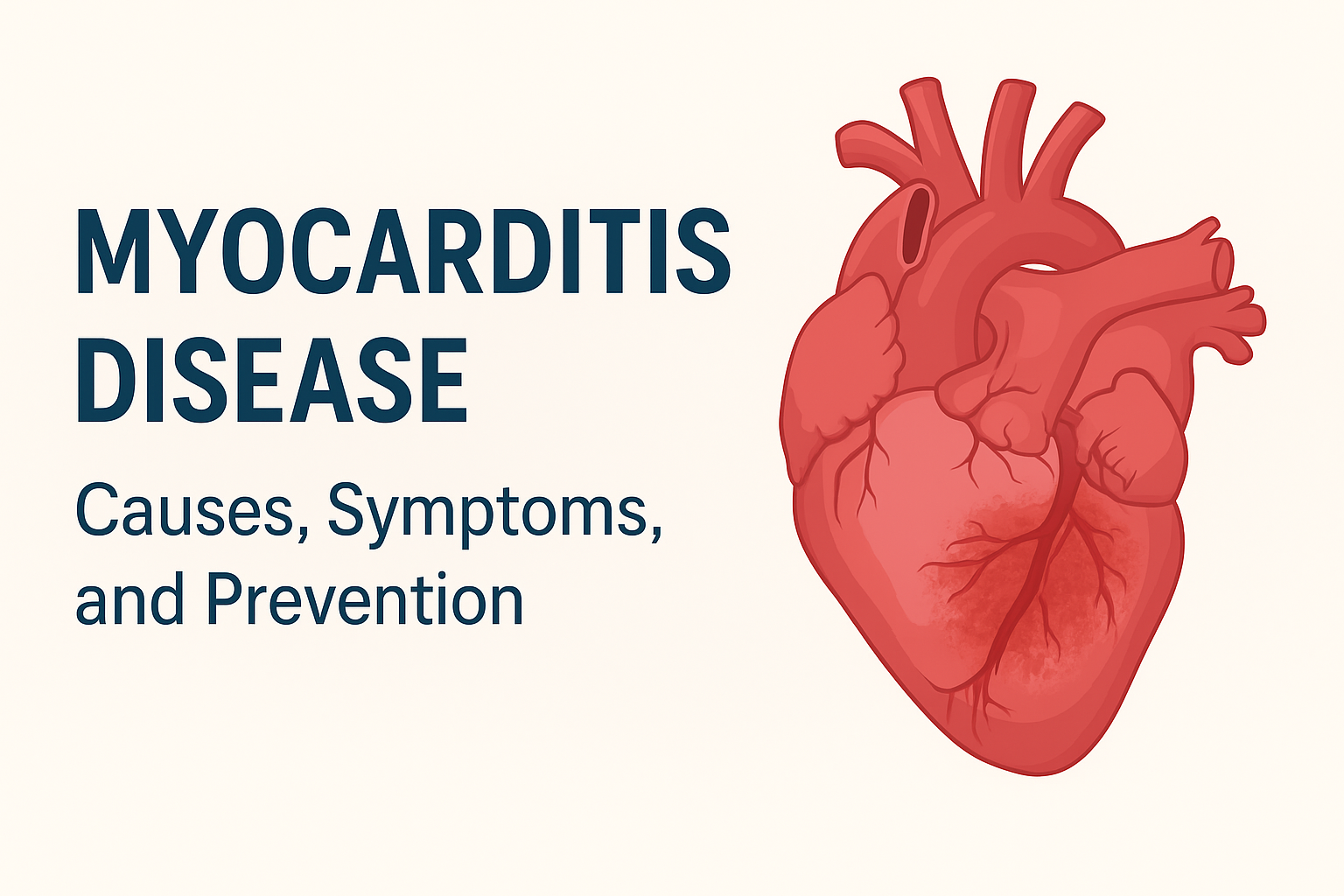
Myocarditis is a serious condition that affects the heart muscle. It develops when the heart tissue becomes inflamed due to infections, immune reactions, or toxins. The disease can appear suddenly. It can also progress slowly over time. Many people do not notice early symptoms. However, it may still cause major complications if not treated on time.
This blog explains myocarditis in a clear and simple way. It covers symptoms, causes, diagnosis, prevention, and non-medicinal care. The goal is to help you understand the disease without confusion. It also highlights the global impact of myocarditis and the importance of early awareness.
Overview of Myocarditis
Myocarditis affects the myocardium, which is the thick heart muscle layer. This muscle pumps blood throughout the body. When inflammation enters this tissue, the pumping ability becomes weak. As a result, the heart struggles to send enough blood to the organs.
The disease affects people of all ages. However, young adults and athletes show slightly higher risk because they may ignore early symptoms. Viral infections remain the most common cause worldwide. Bacterial infections, autoimmune disorders, and toxins also contribute to this condition.
Myocarditis can be mild, moderate, or severe. Mild cases may recover fully. Severe cases may lead to heart failure, irregular rhythm, or sudden cardiac arrest. Therefore, awareness and early diagnosis play a key role in recovery.
Causes of Myocarditis
Myocarditis develops due to several reasons. In most cases, the inflammation begins after a viral attack. Common viruses include influenza, adenovirus, and coxsackievirus. Moreover, some cases link to COVID-19 infection or post-viral immune reactions.
Bacterial infections also trigger myocarditis in some people. Lyme disease, diphtheria, and some strep infections fall in this group. However, they remain less common compared to viral causes.
Autoimmune disorders create another major group. Conditions such as lupus and rheumatoid arthritis sometimes attack heart tissue. The immune system mistakes the heart muscle for a threat. As a result, long-term inflammation develops.
Toxins also damage heart tissue. Excessive alcohol, cocaine, and certain chemotherapy drugs can irritate the myocardium. Heavy metal exposure creates similar effects in rare cases.
In some patients, doctors cannot identify a clear cause. These cases are called idiopathic myocarditis.
Symptoms of Myocarditis
Symptoms vary from person to person. Some people experience mild discomfort. Others face severe and sudden issues. The symptoms often resemble flu or chest infections. Therefore, many patients delay medical help.
Chest pain is one of the most common signs. It may feel sharp or tight. Shortness of breath also appears in many cases. It becomes worse during physical activity. However, some people feel breathless even while resting.
Fatigue is another frequent symptom. You may feel weak even after light tasks. Irregular heartbeat may also occur. Some people feel fluttering or racing sensations. Swelling in the legs and feet appears in advanced cases due to fluid buildup.
Fever, headache, and body aches may also accompany viral-related myocarditis. These early signs often confuse patients. As a result, they ignore the condition until symptoms worsen.
Diagnosis of Myocarditis
Doctors use several methods to diagnose myocarditis. They begin with a health history and physical examination. Chest pain, fatigue, and shortness of breath guide the next steps. Blood tests help detect inflammation and heart enzyme levels. Elevated enzymes often point to muscle injury.
An electrocardiogram records the heart rhythm. It quickly shows irregular beats or stress patterns. Furthermore, an echocardiogram checks the pumping strength. It also reveals swelling or reduced function.
Doctors may also advise cardiac MRI. It provides detailed images of heart tissue. This scan helps confirm inflammation and structural changes. In rare and complex cases, a heart biopsy may be required. It involves collecting a tiny tissue sample for study.
Accurate diagnosis helps guide proper treatment. Therefore, early testing becomes essential.
Treatment Without Medicine
Some people recover from mild myocarditis without strong medication. However, medical supervision is always necessary.
Rest plays the most important role. The heart needs time to heal. Therefore, doctors advise patients to limit physical activity. Heavy exercise increases strain on the heart. As a result, it may worsen inflammation. Proper rest supports natural recovery.
Lifestyle changes also help. A balanced diet lowers stress on the heart. Fresh fruits, vegetables, whole grains, and low-sodium meals support healing. Hydration also keeps the body balanced. However, some patients may need controlled fluid intake to reduce swelling.
Stress management improves recovery. Meditation, light breathing exercises, and relaxation techniques lower heart strain. They also improve sleep quality. Healthy sleep patterns support overall healing.
Avoiding alcohol and tobacco becomes necessary for recovery. These substances weaken heart function. They also slow down inflammation control. Therefore, eliminating them creates a safer environment for healing.
Regular follow-up visits are essential. Doctors monitor heart function during recovery. They ensure the inflammation continues to improve.
Prevention of Myocarditis
You can reduce the risk of myocarditis with simple steps. Preventing infections plays the biggest role. Good hygiene habits, such as regular handwashing, help prevent viral spread. Vaccinations also protect against major infections that affect the heart.
Safe lifestyle habits lower toxin exposure. Avoiding excessive alcohol and illegal drugs protects the myocardium. Moreover, using protective gear at work reduces exposure to chemicals and heavy metals.
Maintaining a strong immune system also reduces risk. A healthy diet, regular exercise, and proper sleep strengthen immunity. These habits help the body fight infections effectively.
Early treatment of infections prevents complications. Do not ignore intense sore throat, fever, or chest discomfort. Seeking medical help early provides better protection for your heart.
Global Impact of Myocarditis
Myocarditis affects millions of people worldwide. The true number may be higher because many cases remain undiagnosed. Viral outbreaks often increase the number of cases in certain regions. The condition also contributes to sudden cardiac events in young adults and athletes.
Healthcare systems carry a heavy burden during viral seasons. Severe myocarditis cases require hospital care. As a result, medical costs rise. Moreover, long-term heart damage affects quality of life for many survivors.
Awareness plays a powerful role in reducing this burden. People who recognize early symptoms seek help sooner. Therefore, education and public health programs remain essential.
FAQs About Myocarditis
What is myocarditis?
Myocarditis is inflammation of the heart muscle. It affects the pumping function and may cause chest pain or shortness of breath.
Is myocarditis dangerous?
It can be dangerous. Severe cases may lead to heart failure or abnormal rhythms. However, many people recover fully with proper care.
Can myocarditis heal naturally?
Mild cases may heal with rest and monitoring. However, medical supervision is always important.
How long does recovery take?
Recovery time varies. Some people improve in a few weeks. Others need several months of careful follow-up.
Is exercise safe during myocarditis?
Intense exercise is not safe. The heart needs rest. Doctors usually pause all heavy activity until full recovery.
Conclusion
Myocarditis is a serious but manageable condition. Early awareness and timely diagnosis make a major difference. A healthy lifestyle also helps protect the heart. Moreover, regular checkups support long-term recovery. If you notice unusual chest pain, fatigue, or breathlessness, seek medical help. Your heart works for you every moment. Take care of it with attention and respect.
Right Sided Heart Failure: Causes, Symptoms & Treatment
https://newsarmour.com/right-sided-heart-failure-causes-symptoms-treatment/
Reference
- World Health Organization – Cardiovascular Diseases Overview
https://www.who.int/health-topics/cardiovascular-diseases - Centers for Disease Control and Prevention – Myocarditis Information
https://www.cdc.gov/heartdisease/myocarditis.htm - American Heart Association – Myocarditis Facts
https://www.heart.org/en/health-topics/heart-failure/what-is-myocarditis - National Institutes of Health – Myocarditis Research
https://www.nhlbi.nih.gov/health/myocarditis - Johns Hopkins Medicine – Myocarditis Details
https://www.hopkinsmedicine.org/health/conditions-and-diseases/myocarditis