Congestive heart failure is a serious long-term medical condition. It affects the heart’s ability to pump blood effectively. The body depends on this constant flow, and even a small drop can cause major health issues. This condition does not mean the heart stops working.
It means the heart becomes weak and cannot work at its full strength.
Congestive heart failure develops slowly in many people. However, it can also appear suddenly after a major health event. Early diagnosis plays an important role in better recovery. Therefore, learning about its symptoms and causes helps people act on time.
This blog explains the condition in a simple and clear way. It also guides you through common signs, risk factors, treatments, and prevention tips.
What Is Congestive Heart Failure?
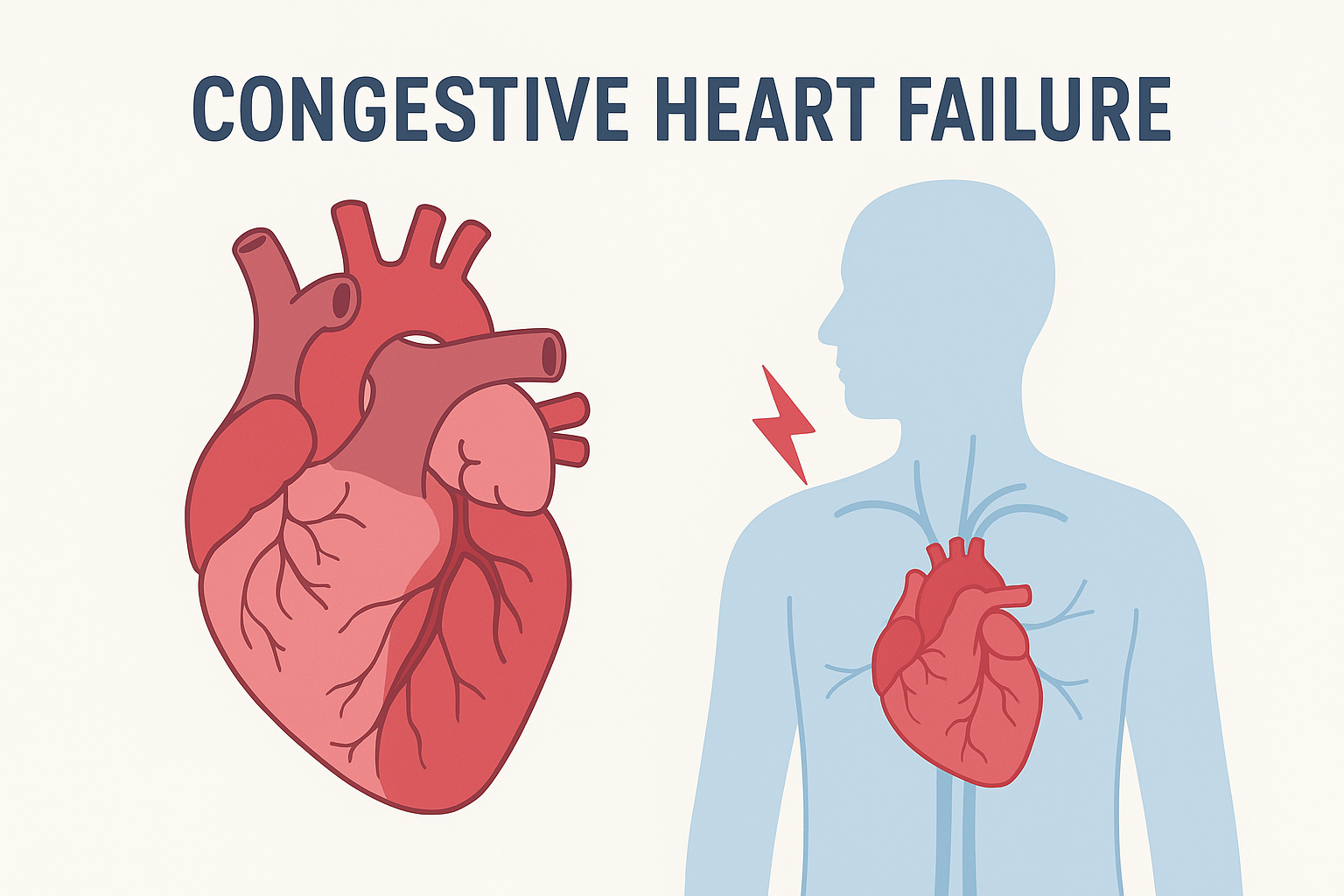
Congestive heart failure, also known as CHF, happens when the heart cannot pump enough blood to meet the body’s needs. As a result, blood and fluid build up in different parts of the body. This fluid often collects in the lungs, legs, or abdomen. The process causes swelling, breathlessness, and reduced energy.
The heart normally contracts and relaxes in a balanced way. However, this balance becomes weak in heart failure. The lower chambers may not squeeze properly. Or they may not relax enough to fill with the right amount of blood. The problem affects the entire circulation system. Over time, the heart becomes bigger and weaker.
CHF is a chronic condition. However, proper treatment helps many people live a stable and active life.
Common Causes of Congestive Heart Failure
Many health issues can damage the heart over time. High blood pressure is one of the most common causes. It forces the heart to work harder every day. As a result, the heart muscles become thicker and weaker.
Coronary artery disease is another major cause. It narrows or blocks the arteries that supply the heart. Reduced blood flow damages the heart tissue. The damage may also lead to a heart attack. Another cause is cardiomyopathy. This condition changes the heart muscles and affects their strength.
Diabetes also increases the risk. High sugar levels damage blood vessels and the heart. Long-term alcohol use and drug misuse affect heart function as well. Some people develop CHF after infections that target the heart muscle. Therefore, controlling these health problems is important for prevention.
Symptoms of Congestive Heart Failure
Symptoms usually appear slowly. However, they become stronger as the condition develops. Shortness of breath is a classic sign. The breathlessness may appear during activity. It may also appear while lying down. The fluid buildup in the lungs causes this problem.
Fatigue is another common symptom. The body does not receive enough oxygen. As a result, a simple task may feel exhausting. Swelling in the legs or ankles is also noticeable. The fluid collects in the lower body due to gravity.
Some people feel chest discomfort. Others notice a fast or irregular heartbeat. Persistent cough, rapid weight gain, and confusion may also occur. These symptoms require medical attention. Early treatment slows the progress of the disease.
Types of Congestive Heart Failure
Doctors classify CHF based on how the heart works. Systolic heart failure happens when the heart cannot contract with enough force. The weak squeeze reduces blood flow. Diastolic heart failure appears when the heart muscles become stiff. The stiffness prevents the chambers from filling properly.
Both types reduce the supply of oxygen and nutrients. However, each type needs a different treatment approach. Doctors use special tests to identify the exact type.
How Doctors Diagnose Congestive Heart Failure
Doctors begin with a physical exam. They listen to the heartbeat and check for swelling. They also review symptoms and medical history. After that, they recommend several tests.
A chest X-ray may show fluid in the lungs. An ECG checks the heart rhythm. Another important test is the echocardiogram. It shows how well the heart pumps blood. Blood tests also help detect problems related to kidney function, thyroid issues, or infections.
These tests help create an accurate diagnosis. A clear diagnosis guides the right treatment plan.
Treatment Options for Congestive Heart Failure
Treatment focuses on improving the heart’s function. It also aims to prevent further damage. Doctors usually begin with medicines. These medicines reduce fluid buildup. They also lower blood pressure and support better heart pumping.
Lifestyle changes play a major role as well. A heart-healthy diet reduces strain on the heart. Regular exercise improves strength and circulation. However, the exercise plan must suit the patient’s condition. Therefore, a doctor or specialist should guide the routine.
In severe cases, doctors may suggest advanced treatments. A pacemaker helps control the heartbeat. An implantable defibrillator prevents sudden heart rhythm problems. Some people may need heart surgery. However, these decisions depend on the patient’s overall health.
Regular follow-ups make treatment more effective. These visits help doctors track improvement and adjust medicines.
Living with Congestive Heart Failure
Life changes after a CHF diagnosis. However, many people manage the condition with discipline. Daily monitoring helps keep the condition stable. Patients keep track of weight, swelling, and shortness of breath. Early changes often signal that treatment needs adjustment.
Stress management also plays a role. Stress increases heart strain. Simple relaxation techniques help reduce this burden. Family support makes the journey easier. People who follow their treatment plan often live productive lives.
Prevention and Long-Term Heart Care
Prevention begins with healthy habits. A balanced diet supports heart function. Less salt reduces fluid retention. Regular activity also strengthens the heart. However, harmful habits can reverse progress. Smoking and heavy drinking weaken the heart. Therefore, avoiding them protects long-term health.
Managing chronic diseases helps prevent CHF. Control of blood pressure and diabetes reduces strain on the heart. Regular checkups detect early warning signs. As a result, people can act before the condition becomes serious.
Conclusion
Congestive heart failure is a major health condition, but it is manageable. Early diagnosis, consistent treatment, and healthy habits improve quality of life. Each step toward better health strengthens the heart.
You can take control of your journey with support and the right guidance. Start small, stay committed, and give your heart the care it deserves.
Frequently Asked Questions
What is the main cause of congestive heart failure?
High blood pressure and coronary artery disease are the most common causes. They weaken the heart over time.
Can congestive heart failure be cured?
It cannot be fully cured. However, treatment helps control symptoms and improve life.
Is congestive heart failure dangerous?
Yes. It is a serious condition. However, early treatment reduces complications.
Can lifestyle changes improve the condition?
Yes. Healthy eating, regular activity, and quitting smoking support heart function.
When should I see a doctor?
See a doctor if you notice swelling, breathlessness, chest discomfort, or sudden weight gain.
Left Side Heart Failure: Symptoms, Causes & Treatment Guide
https://newsarmour.com/left-side-heart-failure/
Reference
- American Heart Association – Heart Failure
https://www.heart.org/en/health-topics/heart-failure - Cleveland Clinic – Congestive Heart Failure Overview
https://my.clevelandclinic.org/health/diseases/17069-heart-failure - Mayo Clinic – Heart Failure Symptoms and Causes
https://www.mayoclinic.org/diseases-conditions/heart-failure - CDC – Heart Failure Facts
https://www.cdc.gov/heartdisease/heart_failure.htm - Johns Hopkins Medicine – Heart Failure Information
https://www.hopkinsmedicine.org/health/conditions-and-diseases/heart-failure