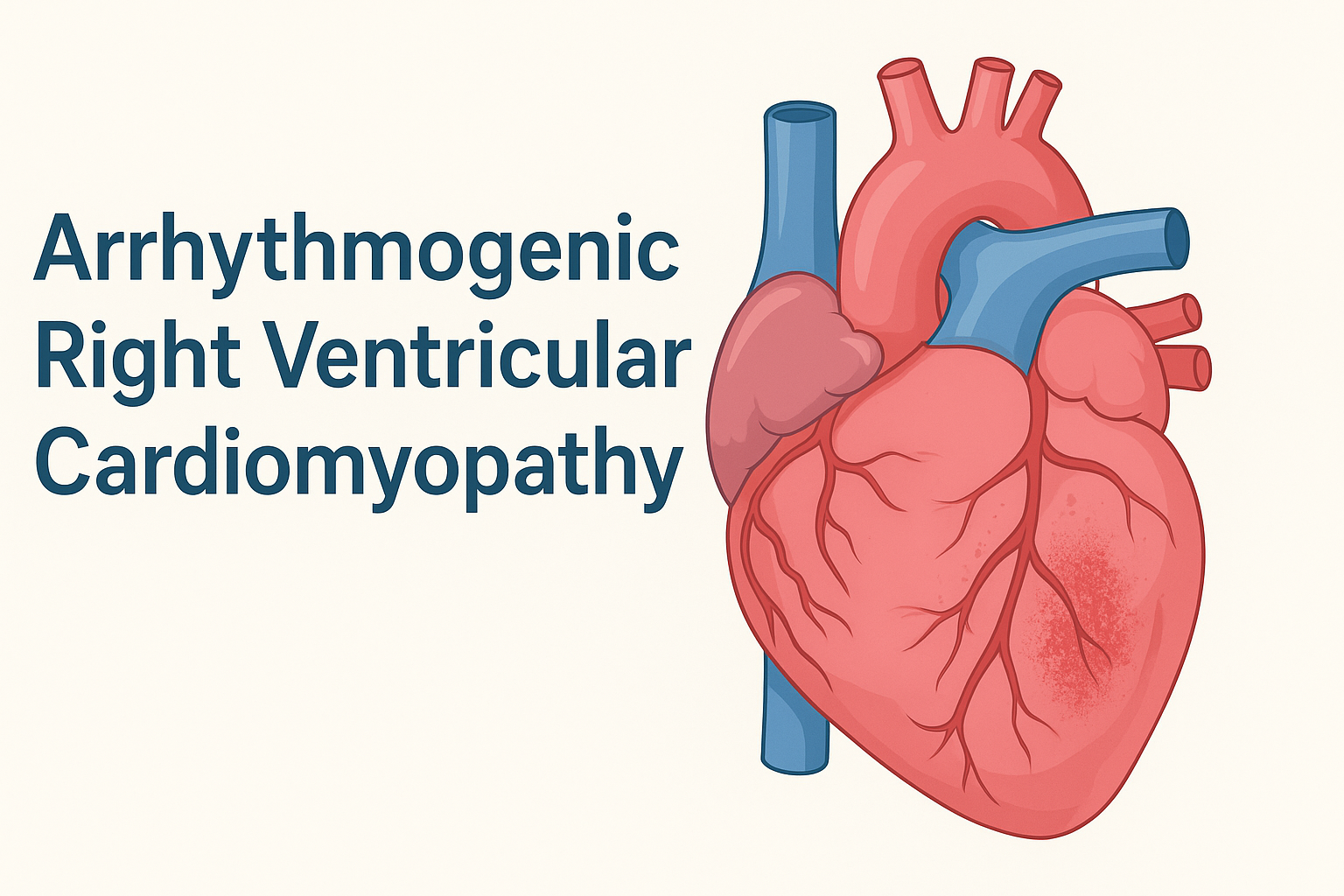
Arrhythmogenic Right Ventricular Cardiomyopathy is a rare but serious heart disease. It affects the muscle of the right ventricle and disrupts normal electrical signals. The condition leads to dangerous heart rhythms and, in severe cases, sudden cardiac death. Many people do not notice early signs, which makes awareness important.
This article explains the disease in a clear and simple way. It also highlights symptoms, causes, diagnosis, and treatment options. As a result, readers can understand the condition and take informed steps.
What Is Arrhythmogenic Right Ventricular Cardiomyopathy
Arrhythmogenic Right Ventricular Cardiomyopathy affects the muscle cells in the right ventricle. These cells slowly break down and get replaced by fat or fibrous tissue. This change weakens the heart walls and causes abnormal electrical activity. The disease often appears in young adults and athletes. However, it can affect people of any age.
Researchers link the disease to genetic mutations. These mutations harm proteins that support heart muscle structure. Therefore, the heart becomes unstable during physical activity. Moreover, patients face a higher risk during intense exercise. The condition progresses slowly but can become life threatening without care.
Key Symptoms of ARVC
Symptoms appear differently in every patient. Some people remain symptom-free for years. Others face sudden and severe episodes. However, certain signs are commonly seen in this condition.
Irregular Heartbeat
Patients often notice skipped beats or a racing heart. This sign appears because of abnormal electrical pathways. The heartbeat may become fast or uneven during exercise. Rest sometimes reduces the feeling, but the issue continues silently.
Fainting Episodes
Sudden fainting is another important symptom. Reduced blood flow to the brain leads to brief loss of consciousness. This event often occurs during physical activity. Therefore, it should never be ignored.
Chest Pain
Mild or moderate chest discomfort may occur in some patients. This happens when the right ventricle struggles to pump blood. The pain usually feels like pressure, but it can vary.
Extreme Fatigue
Many patients feel tired even after light activity. The weakened right ventricle cannot maintain normal blood flow. As a result, daily tasks become difficult.
Causes and Risk Factors
Genetic mutation is the primary cause of ARVC. The disease often runs in families. Therefore, close relatives of a diagnosed patient should consider screening. Environmental factors may also worsen the condition. Intense athletic training is linked to faster progression. Moreover, viral infections might trigger inflammation in the heart.
Young athletes are at higher risk of sudden cardiac events. However, anyone with a family history of the disease can develop symptoms. The condition shows no gender preference. Lifestyle choices do not directly cause the disease but can increase complications.
How Doctors Diagnose ARVC
Diagnosis requires a combination of tests. No single test confirms the disease. Therefore, doctors use several methods to reach a clear conclusion.
Electrocardiogram
An ECG records electrical activity. It often shows irregular patterns in patients with ARVC. These patterns help doctors identify abnormal rhythms.
Echocardiogram
This test uses sound waves to examine the heart. It shows changes in the structure of the right ventricle. Moreover, it helps detect wall thinning and reduced pumping ability.
MRI Scan
Cardiac MRI provides detailed images. It detects fatty or fibrous tissue in the right ventricle. The scan also shows scarring that indicates disease progression.
Genetic Testing
Doctors may suggest genetic testing for patients and family members. The results help identify inherited mutations. As a result, early screening becomes possible for relatives.
Treatment Options for ARVC
Treatment focuses on preventing dangerous heart rhythms and slowing disease progression. Doctors choose plans based on the patient’s condition.
Medications
Medicines help control heart rhythm. Beta blockers and antiarrhythmic drugs are commonly used. These medicines help stabilize electrical activity. They also reduce the risk of sudden events.
Lifestyle Changes
Patients should avoid intense workouts. Heavy exercise puts pressure on the heart. As a result, it increases the chance of dangerous arrhythmias. Moderate physical activity is usually safe under medical guidance.
Implantable Cardioverter-Defibrillator
An ICD is an important device for high-risk patients. It detects abnormal rhythms and delivers electric shocks. These shocks restore normal rhythm and prevent sudden cardiac death.
Catheter Ablation
This procedure targets abnormal electrical pathways. Doctors use heat or cold energy to stop the faulty signals. The method does not cure the disease but reduces symptoms.
Heart Transplant
A transplant becomes necessary in severe and advanced cases. This step is rare but lifesaving. It is considered only when other treatments fail.
Living With ARVC
Living with ARVC requires ongoing care. Regular checkups help monitor changes. Doctors adjust treatments according to symptoms. Patients should follow medical advice for exercise limits. Psychological support also helps many people.
The diagnosis may feel overwhelming, but support groups offer comfort. Moreover, awareness and early action improve outcomes.
Healthy habits can support heart function. Balanced meals, adequate rest, and stress control play important roles.
They do not cure the disease but help the body cope better. Family support also strengthens emotional health. Therefore, open communication is valuable.
Prevention and Early Screening
Prevention focuses on identifying risk early. People with a family history should undergo screening. Early diagnosis reduces complications. Genetic counseling offers guidance for affected families. Moreover, young athletes should pay attention to sudden symptoms. Early medical checks can save lives.
Regular sports screenings can detect abnormal heart rhythms. Although not always perfect, they offer a layer of safety. Doctors often recommend avoiding competitive sports if the risk is high. Safety should always come first.
Conclusion
Arrhythmogenic Right Ventricular Cardiomyopathy is a serious heart condition. Early awareness helps reduce major risks
FAQs
1. What is Arrhythmogenic Right Ventricular Cardiomyopathy?
Arrhythmogenic Right Ventricular Cardiomyopathy is a genetic heart disease that weakens the right ventricle and causes dangerous heart rhythms. It often leads to arrhythmias, fainting, or sudden cardiac events.
2. What causes ARVC?
ARVC is mainly caused by inherited gene mutations that damage proteins responsible for holding heart muscle cells together. Exercise stress and inflammation can worsen the condition over time.
3. How is ARVC diagnosed?
Doctors use a combination of tests, including ECG, echocardiogram, cardiac MRI, Holter monitoring, and genetic testing. No single test confirms ARVC, so a full evaluation is essential.
4. What are the early symptoms of ARVC?
Early symptoms include palpitations, irregular heartbeat, lightheadedness, fainting, and mild chest discomfort. Some people may not show symptoms until the disease progresses.
5. Can ARVC be cured?
There is no permanent cure for ARVC. However, treatment options like medications, lifestyle changes, catheter ablation, and ICD devices help control symptoms and prevent sudden cardiac death.
6. Is exercise safe for people with ARVC?
High-intensity or competitive sports are not safe for people with ARVC. Light to moderate activity may be allowed depending on the doctor’s advice.
7. Is ARVC hereditary?
Yes. ARVC often runs in families. First-degree relatives should undergo heart screening and consider genetic testing for early detection.
8. What is the life expectancy of someone with ARVC?
With proper treatment, regular monitoring, and lifestyle adjustments, many patients live long and stable lives. Early diagnosis greatly improves long-term outcomes.
9. How is ARVC treated?
Treatment includes antiarrhythmic medication, beta-blockers, catheter ablation, ICD implantation, and strict exercise limits. Severe cases may require a heart transplant.
10. When should someone with ARVC seek emergency care?
Emergency care is needed if a patient experiences sudden fainting, severe palpitations, chest pain, or signs of cardiac arrest. Immediate treatment can save life.
Restrictive Cardiomyopathy: Symptoms, Causes & Treatment
https://newsarmour.com/restrictive-cardiomyopathy/
Reference
- https://www.heart.org/en/health-topics/cardiomyopathy/arrhythmogenic-right-ventricular-dysplasia-arvd
- https://www.ncbi.nlm.nih.gov/books/NBK1131/
- https://www.mayoclinic.org/diseases-conditions/arvd/
- https://www.clevelandclinic.org/health/diseases/17615-arvc
- https://www.escardio.org/Education/Practice-Tools/CVD-prevention-toolbox/ARVC