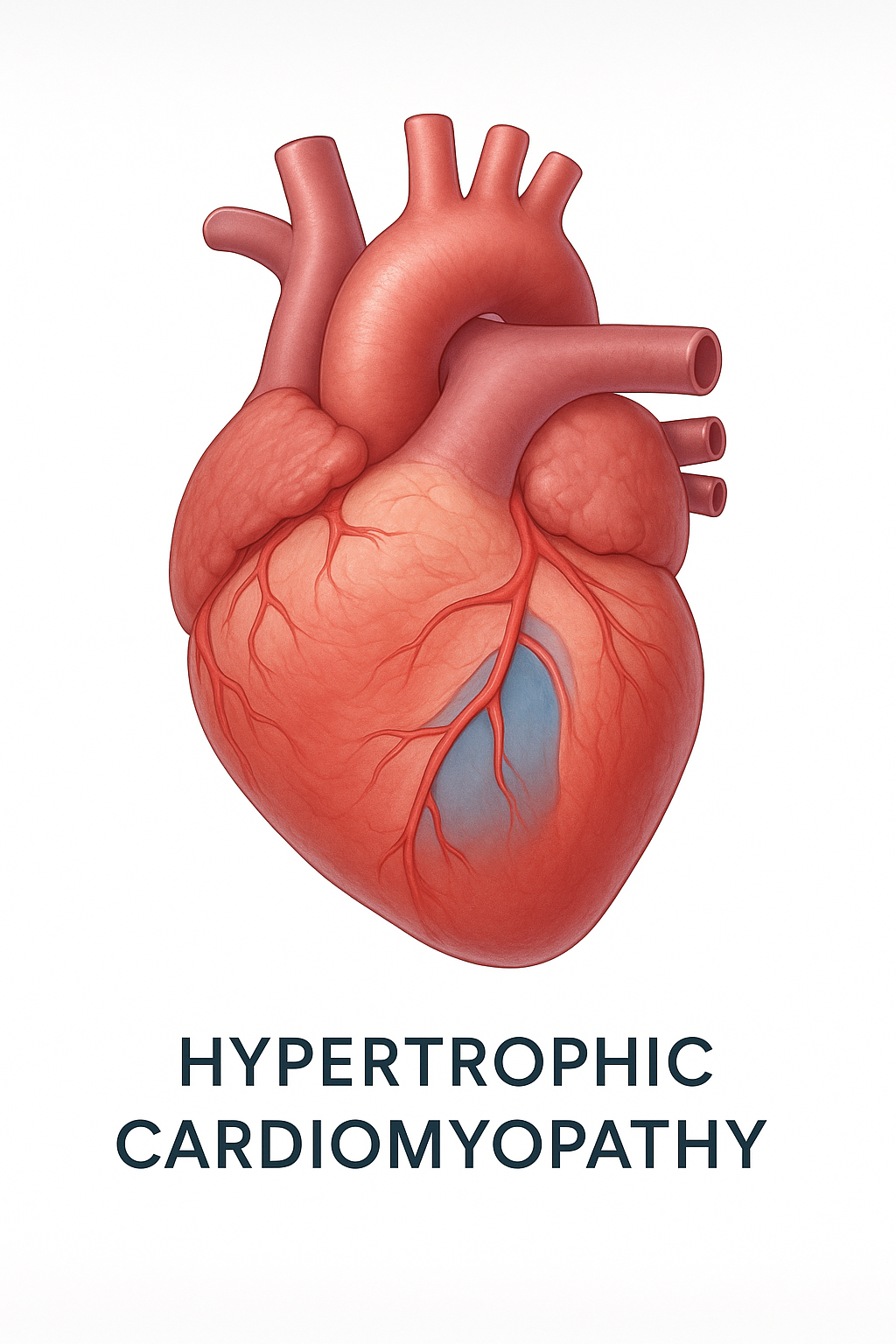
Hypertrophic cardiomyopathy is a serious heart disease that affects the heart muscle. It causes the walls of the heart to thicken. This thickening makes it harder for the heart to pump blood. The condition can appear at any age. It is also one of the most common inherited heart diseases.
Many people do not know they have it. However, early awareness can improve outcomes. This blog explains the causes, symptoms, diagnosis, and treatment of hypertrophic cardiomyopathy. It also shares guidance that helps patients and families stay safe.
What Is Hypertrophic Cardiomyopathy?
Hypertrophic cardiomyopathy, or HCM, is a genetic condition. It leads to abnormal growth of the heart muscle. The thickening usually occurs in the left ventricle. However, it can also affect the heart’s septum. As a result, the heart struggles to pump enough blood into the body.
Although the condition is genetic, it does not always show symptoms early. Many people live normal lives for years. However, some experience severe signs that need urgent care.
Causes of Hypertrophic Cardiomyopathy
The major cause of HCM is a gene mutation. This mutation changes how the heart muscle forms. Therefore, the heart becomes thick over time. The condition usually passes from parent to child. However, new mutations can also appear without a family history.
Lifestyle does not cause HCM. However, lifestyle choices can influence how severe it becomes. Stress, intense physical activity, and uncontrolled health conditions can worsen symptoms. Early screening helps identify the disease before complications develop.
Common Symptoms of HCM
Symptoms of hypertrophic cardiomyopathy vary widely. Some people have mild discomfort. Others experience sudden and intense signs. Symptoms often increase during exertion. Shortness of breath is one of the earliest symptoms. The thick heart muscle affects normal blood flow. Chest pain can also appear because the heart struggles during activity.
Some people feel rapid or irregular heartbeats. These are known as palpitations. Lightheadedness is another warning sign. Fainting can occur in advanced cases. The condition can also cause swelling in the legs or feet. However, some people remain symptom-free for years.
How HCM Affects the Body
Hypertrophic cardiomyopathy affects the heart’s ability to fill with blood. The thickened muscle leaves less space inside the ventricle. As a result, the heart cannot send enough blood to the body. The condition also affects the heart’s electrical system.
Therefore, it increases the risk of abnormal heart rhythms. These rhythms can be dangerous if left untreated. In some cases, the heart’s pumping pressure becomes too high. This pressure affects other organs. The strain can also cause fatigue and weakness.
Risk Factors and Family History
Family history is the strongest risk factor for HCM. If one parent has the condition, the child has a high chance of inheriting it. Therefore, doctors recommend genetic screening for close relatives. Age is not a major risk factor. The condition can appear in childhood, adulthood, or later life. However, symptoms often become clearer with age. High blood pressure and other heart diseases can worsen the condition. Therefore, early awareness is essential.
How HCM Is Diagnosed
Doctors use several tests to diagnose hypertrophic cardiomyopathy. An echocardiogram is the most common test. It uses sound waves to show the heart’s structure. Doctors can see if the walls are thickened. They can also check how well the heart pumps blood. An ECG is another important test. It measures the heart’s electrical activity.
This helps detect rhythm problems. In some cases, doctors suggest a cardiac MRI. It gives a clear image of the heart muscle. Genetic testing is also useful. It helps identify the specific mutation responsible for HCM. Early diagnosis allows better management and prevents complications.
Treatment Options for Hypertrophic Cardiomyopathy
Treatment depends on the severity of symptoms. Medications help control heart rate. They also help reduce pressure inside the heart. Beta-blockers and calcium channel blockers are common options. Doctors may recommend lifestyle changes.
These changes include avoiding strenuous exercise. They also include managing stress and maintaining a healthy routine. In severe cases, procedures may be necessary. Septal myectomy is a surgery that removes part of the thickened muscle. Alcohol septal ablation is another technique.
It shrinks the thickened area by reducing blood supply to it. An implantable cardioverter-defibrillator, or ICD, can also help. It prevents dangerous heart rhythms. Therefore, it reduces the risk of sudden cardiac events.
Living with Hypertrophic Cardiomyopathy
Life with HCM requires awareness and regular care. Many people live full and active lives. However, they must understand their limits. Regular checkups help monitor heart function. Doctors adjust treatments when needed. Patients should avoid extreme physical activity.
Light to moderate exercise is safe for many people. However, this must be approved by a doctor. Managing stress also helps the heart work better. A healthy diet supports overall health. Therefore, it is important to maintain good habits.
Families should also be aware of the genetic nature of HCM. Screening helps protect future generations.
Possible Complications
Hypertrophic cardiomyopathy can lead to complications if not treated. Heart failure is a major risk. The thickened heart cannot pump enough blood. This causes fatigue and swelling. Abnormal heart rhythms are another threat. They can cause fainting or sudden cardiac arrest. Although rare, sudden cardiac arrest is a serious concern. It often occurs during intense activity.
Therefore, monitoring and early intervention are essential. Stroke is another risk. Irregular heartbeats can cause blood clots. These clots travel to the brain and block blood flow. Proper treatment reduces these risks significantly.
Prevention and Early Awareness
You cannot prevent HCM because it is genetic. However, you can prevent complications. Regular heart checkups are important. Early diagnosis reduces long-term risks. Family members should also get screened. Awareness helps identify the condition early. Healthy habits also support heart health. Doctors guide patients on safe activities. Education and understanding empower families. As a result, they can manage the disease confidently.
Conclusion
Hypertrophic cardiomyopathy is a complex but manageable heart condition. Early detection, proper treatment, and lifestyle awareness help patients lead healthy lives. If you or a family member has symptoms, consider a checkup soon. Timely action can protect your heart and improve your future. Stay informed, stay proactive, and take each step toward a stronger and healthier life.
FAQs
What is hypertrophic cardiomyopathy?
It is a genetic condition that causes the heart muscle to thicken and pump blood less efficiently.
Is HCM dangerous?
It can be dangerous if untreated. However, proper care reduces most risks.
Can HCM be cured?
There is no cure, but treatment helps control symptoms and prevent complications.
Is exercise safe for people with HCM?
Light and moderate exercise may be safe. However, intense activity can be risky.
Should family members get tested?
Yes. Family screening is important because HCM is genetic.
Acute Coronary Syndrome: Symptoms, Causes & Treatment Guide
https://newsarmour.com/acute-coronary-syndrome/
Reference
- American Heart Association – Hypertrophic Cardiomyopathy
https://www.heart.org/en/health-topics/cardiomyopathy/what-is-cardiomyopathy-in-adults/hypertrophic-cardiomyopathy - Mayo Clinic – Hypertrophic Cardiomyopathy Overview
https://www.mayoclinic.org/diseases-conditions/hypertrophic-cardiomyopathy - Cleveland Clinic – Hypertrophic Cardiomyopathy
https://my.clevelandclinic.org/health/diseases/17435-hypertrophic-cardiomyopathy - National Heart, Lung, and Blood Institute – Cardiomyopathy
https://www.nhlbi.nih.gov/health/cardiomyopathy - Johns Hopkins Medicine – HCM Information
https://www.hopkinsmedicine.org/health/conditions-and-diseases/hypertrophic-cardiomyopathy