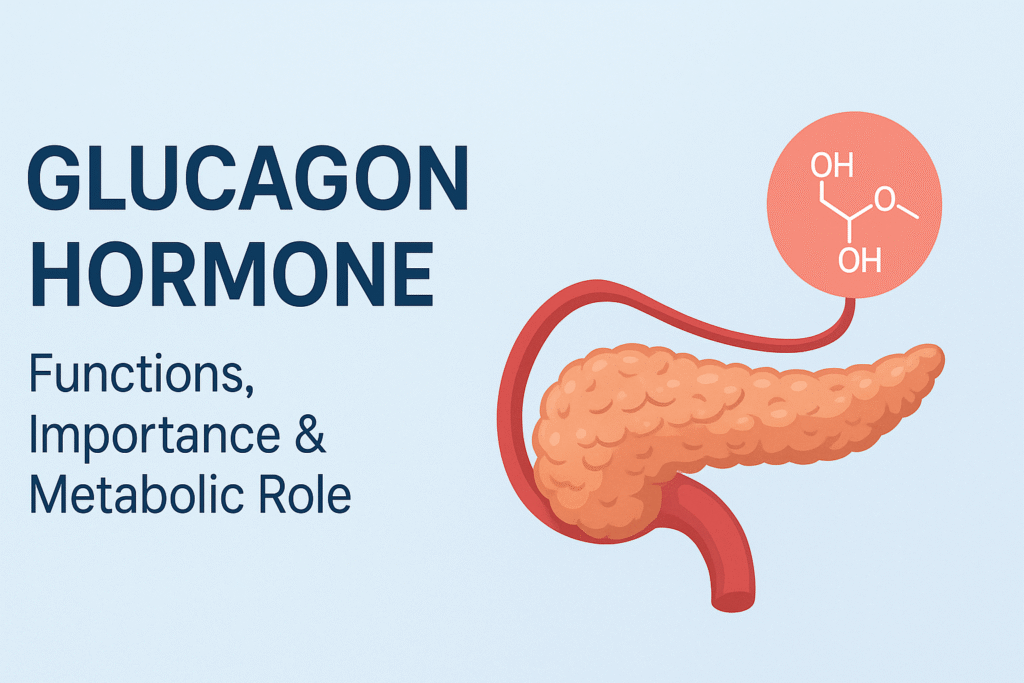
Glucagon is one of the most important hormones for maintaining stable blood sugar levels. Many people know about insulin, but few understand how glucagon works silently in the background. Yet this hormone plays a powerful role in keeping your brain, muscles, and organs energized.
A deeper look at glucagon gives you a clearer picture of how your body protects itself during fasting, exercise, and stress.
Understanding Glucagon
Glucagon is a peptide hormone produced by the alpha cells of the pancreas. It raises blood sugar when levels fall too low. Unlike insulin, which lowers glucose, glucagon acts as a natural safety mechanism. This partnership keeps your body in balance. It ensures that your cells always have access to energy, even during long gaps between meals.
The hormone acts mainly on the liver. Here, it triggers the release of stored glucose and also supports the creation of new glucose. These actions keep your blood sugar steady when your body needs a quick source of fuel.
How Glucagon Works in the Body
Glucagon becomes most active when your blood sugar begins to drop. It sends a clear message to the liver to break down glycogen, the stored form of glucose. This process works quickly and provides immediate energy. Moreover, glucagon promotes the formation of glucose from amino acids. This pathway, called gluconeogenesis, acts like a secondary fuel generator.
The hormone also plays a key role in fat metabolism. It encourages the body to break down stored fat during fasting or intense workouts. As a result, your body shifts naturally from burning sugar to burning fat. This shift supports long-term energy stability and metabolic health.
The Balance Between Glucagon and Insulin
Glucagon and insulin form a delicate partnership. Both hormones work together to keep your blood sugar within a safe range. Insulin brings sugar down when it gets too high. Glucagon brings it up when it gets too low. This harmony prevents dangerous fluctuations.
After a meal, insulin rises and glucagon falls. During fasting or exercise, the opposite happens. This constant rhythm ensures that your body always stays fueled. When this balance breaks, metabolic problems can follow. Reduced glucagon activity may cause hypoglycemia. Excessive glucagon activity can contribute to high blood sugar in diabetes.
Key Functions of Glucagon
Maintains Stable Blood Sugar Levels
Glucagon acts as a protective hormone. It prevents blood sugar from dropping to unsafe levels. This function is crucial because your brain depends heavily on glucose for normal function.
Triggers Glycogen Breakdown
The liver stores glucose in the form of glycogen. Glucagon signals the liver to break down this storage when needed. This release keeps your energy levels steady between meals.
Supports Gluconeogenesis
During extended fasting, your body may run out of stored glycogen. Glucagon helps the liver produce new glucose from amino acids. This keeps your organs functioning even when food is limited.
Promotes Fat Burning
Glucagon activates enzymes that break down stored fat. This shift helps your body rely on fat as a long-term fuel source. It also supports ketone production, which becomes essential during prolonged fasting.
Maintains Overall Energy Balance
The hormone ensures that your cells always have access to fuel. It helps you stay active, alert, and focused. This effect benefits everyone—from students to athletes to working professionals.
Factors That Influence Glucagon Levels
Several signals regulate glucagon release. Low blood sugar is the strongest trigger. Protein-rich meals can also raise glucagon. In contrast, high carbohydrate intake suppresses it. Exercise stimulates glucagon because your muscles need immediate energy. Stress hormones like adrenaline and cortisol can also increase glucagon output.
Insulin plays a major role as well. It prevents glucagon from rising too high after meals. This balance keeps your glucose levels in a healthy range.
Glucagon and Diabetes
Glucagon has a significant impact on diabetes. In type 1 diabetes, glucagon levels may rise even when blood sugar is already high. This imbalance makes glucose management more difficult. Type 2 diabetes may also involve impaired glucagon control. As a result, blood sugar stays elevated for longer periods.
Modern research focuses on improving glucagon regulation. New medications aim to balance glucagon and insulin more effectively. Better control of this hormone can improve long-term metabolic outcomes.
A rare condition known as glucagonoma occurs when a tumor produces too much glucagon. It can lead to weight loss, diabetes, and skin problems. Early diagnosis and treatment improve prognosis and quality of life.
Glucagon as an Emergency Treatment
Glucagon is often used in medical emergencies. When a person with diabetes experiences severe hypoglycemia, glucagon can raise blood sugar quickly. Injectable and nasal forms are available. These treatments make it easier for caregivers to assist during critical situations. They also offer added safety for people at high risk of low blood sugar.
Lifestyle Habits That Affect Glucagon
Your daily habits influence how your body uses glucagon. Balanced meals that include protein, healthy fats, and moderate carbohydrates help maintain stability. Frequent exercise promotes proper hormone function. It also enhances the body’s ability to switch between sugar and fat as fuel.
Stress management plays a vital role. Chronic stress raises glucagon because cortisol levels remain high. Adequate sleep, hydration, and mindfulness practices help maintain hormonal balance.
Why Glucagon Matters for Weight Management
Glucagon supports fat metabolism. When activated, it encourages the body to burn stored fat for energy. This process becomes especially useful during fasting or exercise. Balanced eating patterns allow glucagon to work naturally. As a result, your body becomes more efficient at using both glucose and fat.
Some people use intermittent fasting to improve glucagon activity. This approach may support fat burning and metabolic health. However, fasting should be done carefully and with proper guidance.
New Research on Glucagon
Recent studies have expanded our understanding of glucagon. Researchers now know that it influences appetite and satiety. Glucagon may help reduce hunger and support weight control. Scientists are also testing multi-action medications that target both glucagon and GLP-1 receptors. Early results show improvements in blood sugar control and weight management.
These developments may change the future of diabetes and metabolic care.
Conclusion
Glucagon is more than just a blood sugar-raising hormone. It protects your body during fasting, supports fat burning, and maintains energy balance every day. When it works in harmony with insulin, your metabolism stays strong and steady.
Caring for your metabolic health begins with awareness. Choose balanced meals, stay active, and manage stress thoughtfully. Small daily steps create long-term strength. Your body depends on this delicate hormonal balance. Support it with consistent and mindful habits.
FAQs on Glucagon Hormone
What is glucagon?
Glucagon is a hormone produced by the alpha cells of the pancreas. It raises blood sugar levels when they drop too low. It helps your body maintain steady energy during fasting or stress.
How does glucagon differ from insulin?
Insulin lowers blood sugar, while glucagon raises it. Both hormones work together to keep your glucose levels stable. Their balance is essential for healthy metabolism.
When does the body release glucagon?
The body releases glucagon when blood sugar falls. It also rises after protein-rich meals, during intense exercise, and in times of stress. These signals help the body access stored energy.
What does glucagon do in the liver?
Glucagon triggers the liver to break down glycogen into glucose. It also supports the creation of new glucose from amino acids. These actions help maintain healthy glucose levels.
Can glucagon help with fat burning?
Yes. Glucagon promotes the breakdown of stored fat during fasting or physical activity. It supports the shift from burning sugar to burning fat for energy.
Why is glucagon important in diabetes?
In diabetes, glucagon can become overactive or poorly regulated. This problem may increase blood sugar levels. Better glucagon control can improve diabetes management.
Is glucagon used in medical emergencies?
Yes. Glucagon is used to treat severe hypoglycemia. Emergency glucagon kits, including injections and nasal forms, help raise blood sugar quickly when a person is unconscious or unable to eat.
How does diet affect glucagon levels?
Protein-rich foods raise glucagon. High carbohydrate foods lower it. Balanced meals help maintain the right interaction between insulin and glucagon.
Does exercise influence glucagon?
Intense workouts increase glucagon release because the body needs more glucose. Regular exercise improves how your body uses both glucose and fat for energy.
Can stress affect glucagon?
Yes. Stress hormones such as cortisol can raise glucagon levels. Good sleep, hydration, and relaxation techniques help support healthy hormone balance.
Does glucagon play a role in weight management?
Glucagon supports fat metabolism. When activated, it helps your body burn stored fat. Healthy eating patterns and regular movement improve this natural process.
Is glucagon production ever too high?
Extremely high glucagon levels may indicate a rare condition called glucagonoma. It can cause weight loss, diabetes, and skin problems. Early medical care improves outcomes.
Is glucagon safe for everyone?
Glucagon is safe when used appropriately. However, people with certain medical conditions should consult their doctor. Professional guidance ensures proper dosage and use.
Can lifestyle changes improve glucagon balance?
Yes. Exercise, balanced meals, stress control, and proper sleep support healthy glucagon function. Small daily habits create long-term metabolic stability.
If you want, I can add these FAQs to the blog, refine them further, or expand them with more detailed answers.
Insulin Hormone: Key Functions & Health Role
https://newsarmour.com/insulin-hormone/
Reference
- NIH – Glucagon Overview
https://www.ncbi.nlm.nih.gov/books/NBK279127/ - Mayo Clinic – Hormones and Metabolism
https://www.mayoclinic.org/diseases-conditions/diabetes/in-depth/blood-sugar/art-20046628 - Cleveland Clinic – Glucagon Function
https://my.clevelandclinic.org/health/body/22053-glucagon - Hormone Health Network – Glucagon Basics
https://www.endocrine.org/patient-engagement/endocrine-library/glucagon - MedlinePlus – Blood Glucose Control
https://medlineplus.gov/bloodglucose.html